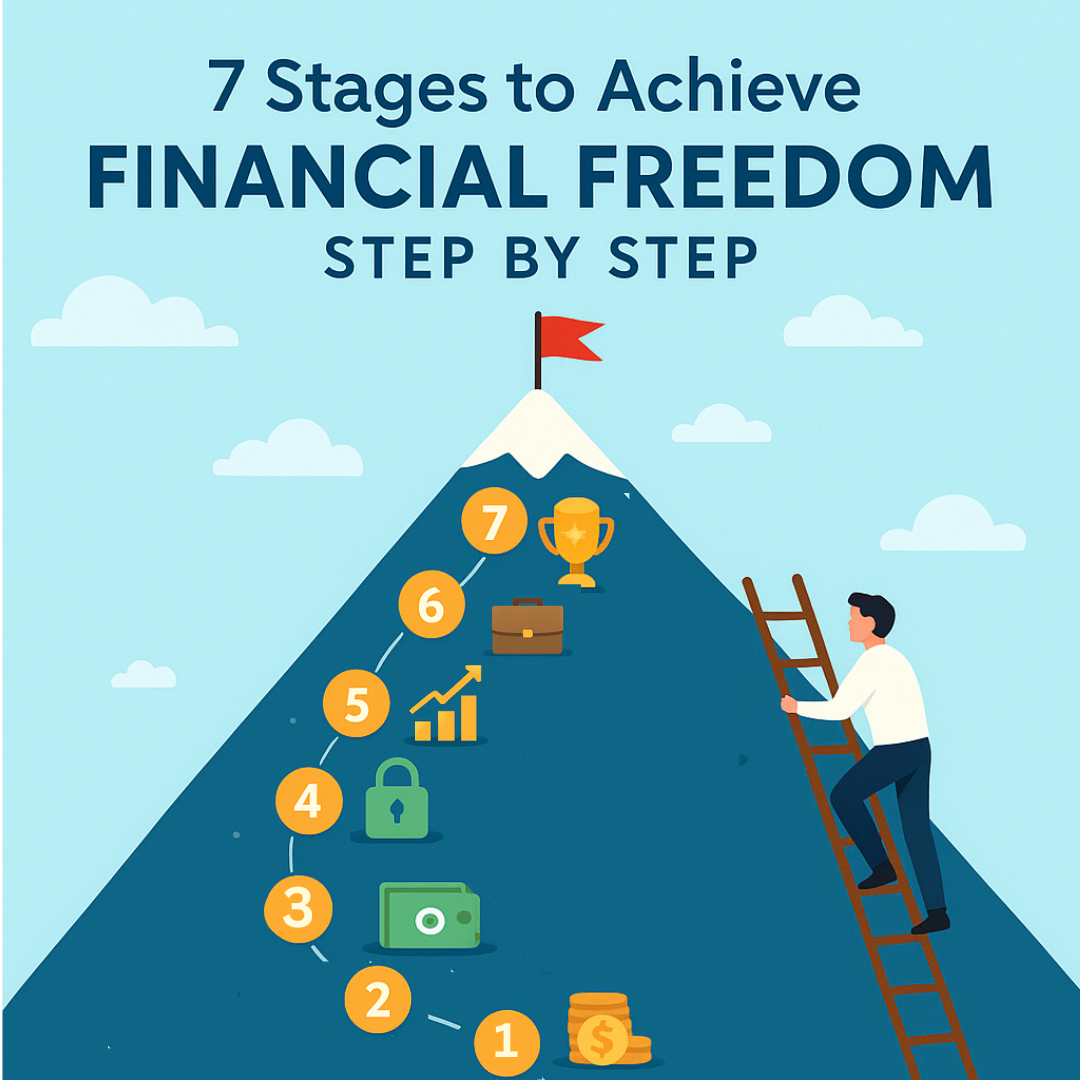
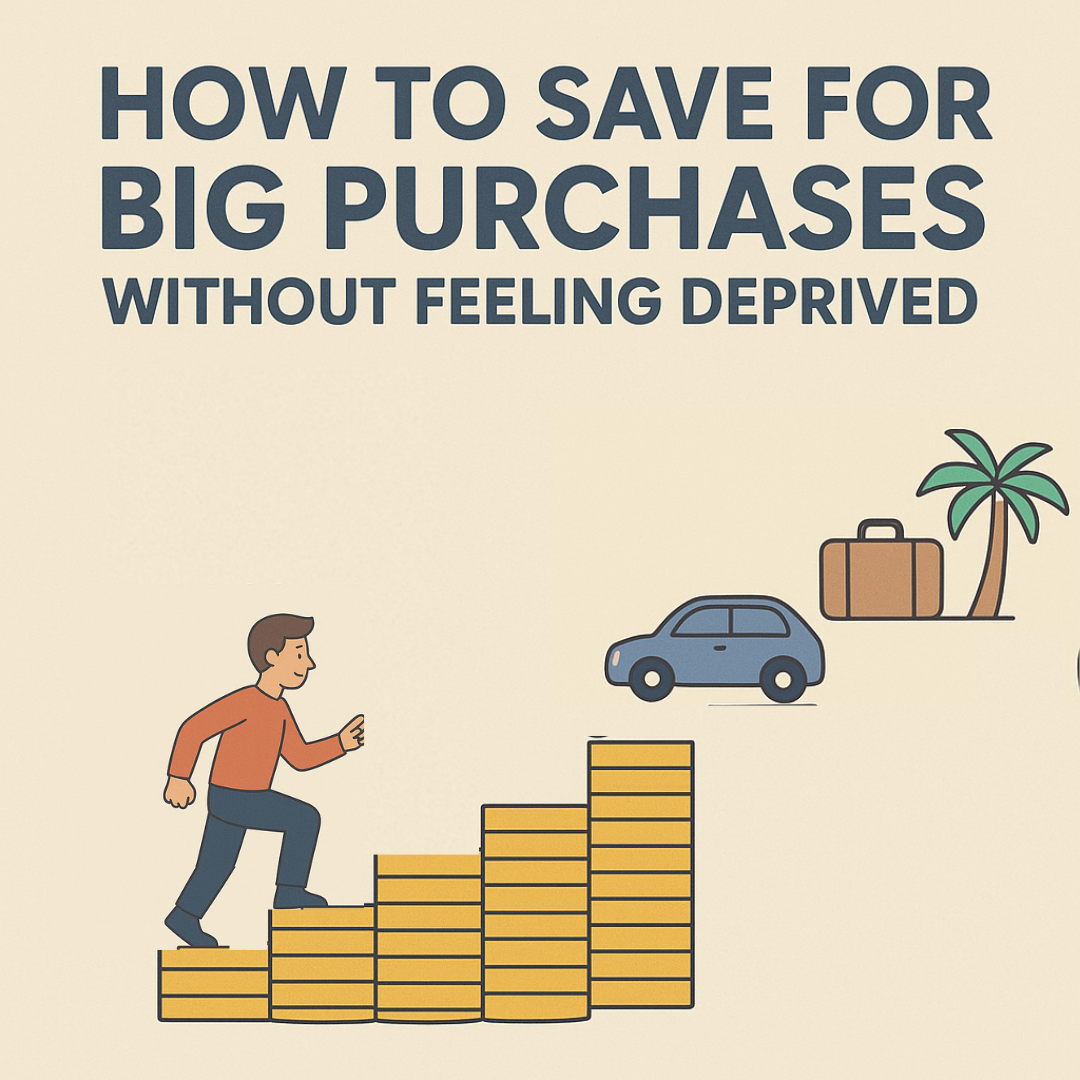
Financial freedom isn’t a single moment — it’s a journey. It’s a step-by-step progression from survival to abundance, from stress to confidence, and from working for money to making money work for you.
Everyone starts at different points, but the important thing is this: there is always a clear path forward, no matter where you are today.
Below are the 7 Stages of Financial Freedom, how to identify which stage you’re in, and what you should do to move to the next level.
Stage 1: Living Paycheck to Paycheck
Living paycheck to paycheck is where many people begin. Your income comes in, but almost all of it goes right back out. Bills, EMIs, groceries, transport, rent — by the end of the month, the balance is close to zero.
Sometimes you may even need to use credit cards or loans to get through the month.
Signs You’re in This Stage
No savings
No emergency fund
High stress around money
Income barely covers basic expenses
One unexpected bill can throw everything off
Your Primary Goal
Increase the gap between income and expenses.
How to Move to Stage 2
Track every expense for 30 days
Reduce non-essential spending
Look for quick income boosters: freelance work, part-time gigs, selling unused items
Ask for a raise if justified
Avoid high-interest debt where possible
Even small changes — like saving $20 a week — can create breathing room.
Stage 2: Gaining Stability
At this stage, your income covers your living expenses, but not much more. You are still vulnerable if an emergency happens, and debt may still be a burden.
Switch to more affordable service providers (internet, insurance, subscriptions)
This stage is about getting control, not perfection.
Stage 3: Breathing Room
Now you’re no longer firefighting every month. Money is starting to stay in the account. You can save consistently, invest a little, and start planning more intentionally.
Automate everything you can — savings, bills, investing
Set 1–3 financial targets for the next 12 months
You’re now moving from survival to strategic planning.
Stage 4: Feeling Secure
This is the stage where you begin to feel safe. You’re no longer one paycheck away from disaster. If an emergency happens — appliance failure, car repair, sudden medical bill — you can handle it.
At this stage, you’re no longer worried about bills — you’re planning the future.
Stage 5: Wealth Building & Retirement Planning
This stage is all about the long game. You’re not just saving money — you’re building wealth. Money is growing even when you’re not working.
Signs You’re in This Stage
Investments are growing year after year
You have clear financial goals
You’ve begun thinking about retirement or long-term financial independence
Your Primary Goal
Grow your investments enough to generate future financial independence.
How to Move to Stage 6
Define your retirement lifestyle and estimate the required savings
Calculate monthly contributions needed to reach your goal
Review and rebalance investments at least once a year
Maximize tax-efficient investment options
Explore additional income streams for wealth acceleration
At this level, you’re no longer playing defense — you’re playing offense.
Stage 6: Financial Freedom in Everyday Life
This stage is where you get to enjoy life on your own terms. Money is no longer a constant worry. You have enough financial stability to spend on what matters most to you.
Signs You’re in This Stage
Bills are easily covered
Investments and savings are strong
You can spend guilt-free on passions and priorities
Work becomes a choice, not a necessity
Your Primary Goal
Use money intentionally to improve your life.
How to Maximize This Stage
Identify what matters most to you
Travel
Family
Experiences
Education
Health
Cut spending on things that don’t bring joy
Increase spending on what does
Continue building wealth while enjoying life
You now control your money — not the other way around.
Stage 7: Legacy & Impact
The final stage of financial freedom is about purpose. At this point, your money can have an impact that lasts beyond you.
Signs You’re in This Stage
Investments can sustain your lifestyle
You have surplus wealth
You can support causes or people you care about
Your Primary Goal
Use wealth to leave a legacy.
How to Make an Impact
Support charities or causes you believe in
Help family members with education or financial stability
Pass down financial knowledge
Create a will or estate plan
Contribute to community programs, businesses, or scholarships
Financial freedom becomes something bigger — not just financial success, but meaningful impact.
How to Know Which Stage You’re In
A simple checklist:
If you…
You’re likely in…
Can’t cover basic monthly costs
Stage 1
Can cover costs but save very little
Stage 2
Have breathing room and regular savings
Stage 3
Have strong emergency funds and control
Stage 4
Are investing consistently for long-term goals
Stage 5
Can enjoy life without financial stress
Stage 6
Are creating long-lasting impact
Stage 7
Final Thoughts
You don’t need to climb all seven stages overnight. Financial freedom is a journey — and every step counts. What matters is movement:
A little more income
A little less unnecessary spending
One extra investment contribution
A clearer financial plan
Every small improvement compounds into something bigger.
Wherever you are today, the next stage is within reach — and now you know exactly how to get there.