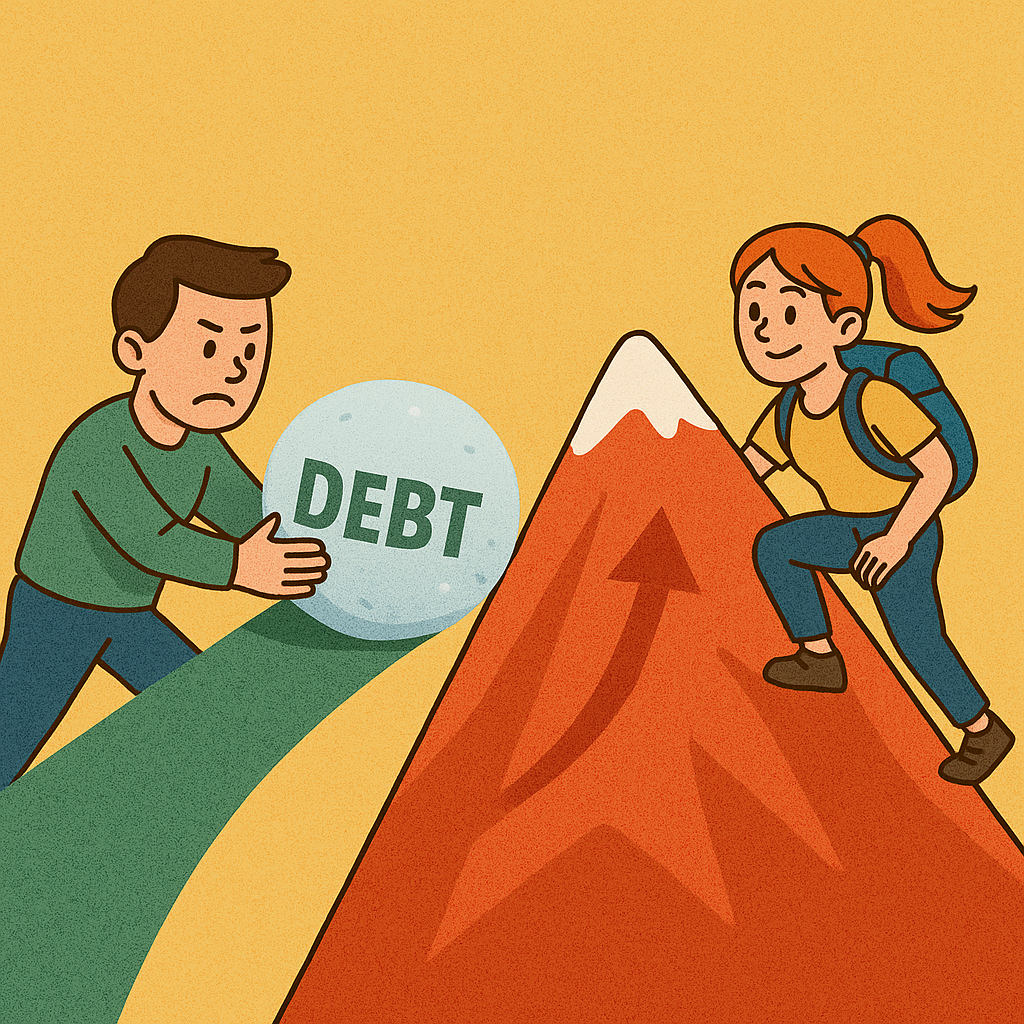
Debt can feel like a heavy weight on your shoulders—especially when you have multiple balances, minimum payments, and interest stacking up. Many people struggle to get motivated to pay off debt because the task feels overwhelming. That’s where the Debt Snowball Method comes in—a simple, psychological approach to tackling debt that focuses on small wins to build momentum.
What Is the Debt Snowball Method?
The Debt Snowball Method is a debt repayment strategy where you pay off your debts from smallest to largest, regardless of interest rates. The goal isn’t to save the most money on interest but to gain motivation through early wins. Paying off smaller balances first gives you a sense of accomplishment that encourages you to keep going until all your debt is eliminated.
How the Debt Snowball Method Works (Step-by-Step)
Here’s a simple way to implement the method:
List all your debts from smallest balance to largest balance. Ignore interest rates for now.
Make minimum payments on all debts except the smallest.
Put extra money toward the smallest debt until it’s fully paid off.
Move to the next smallest debt, applying the payment from the previous debt in addition to its minimum.
Repeat the process until all debts are gone.
The “snowball” grows bigger as you move from one debt to the next, eventually accelerating your payoff.
Debt Snowball Example
Let’s say you have the following debts:
Debt
Balance
Minimum Payment
Credit Card
$500
$25
Personal Loan
$1,200
$50
Car Loan
$5,000
$200
Here’s how the Debt Snowball Method works in practice:
Month 1–2: Focus extra funds on the $500 credit card. Paying more than the minimum clears it quickly, giving you your first win.
Month 3–5: Apply the freed-up money plus the $50 minimum toward the $1,200 personal loan. You pay it off faster than just the minimum.
Month 6+: Roll all payments from the first two debts into the $5,000 car loan. With more money going toward it each month, the largest debt is paid off much faster.
Result: Small wins build momentum, making it easier to tackle bigger debts and stay motivated.
Why the Debt Snowball Method Works Psychologically
The Debt Snowball Method isn’t just math—it’s motivation. Here’s why it’s effective:
Small wins build confidence: Paying off even one debt boosts morale.
Momentum grows: Each paid-off debt frees up money to tackle the next one.
Both methods work. Choose Debt Snowball if you need motivation and small wins, and Debt Avalanche if your priority is minimizing interest.
Is the Debt Snowball Right for You?
The Debt Snowball works best if:
You feel overwhelmed by multiple debts
You need motivation to stick to a plan
You want to see progress quickly
It may be less effective if you’re focused solely on saving money on interest, but many find the psychological boost more valuable than minor interest savings.
Final Thoughts
The Debt Snowball Method proves that small wins can defeat big challenges. By focusing on one debt at a time and celebrating each victory, you can build momentum, stay motivated, and eventually eliminate all your debt.
Remember: debt repayment isn’t just about numbers—it’s about behavior, psychology, and consistency. With the Debt Snowball Method and the right tools, even the most intimidating debt can be conquered.