You remember your rent. Your mortgage. Your phone bill. Even your Netflix subscription.
But then, out of nowhere…
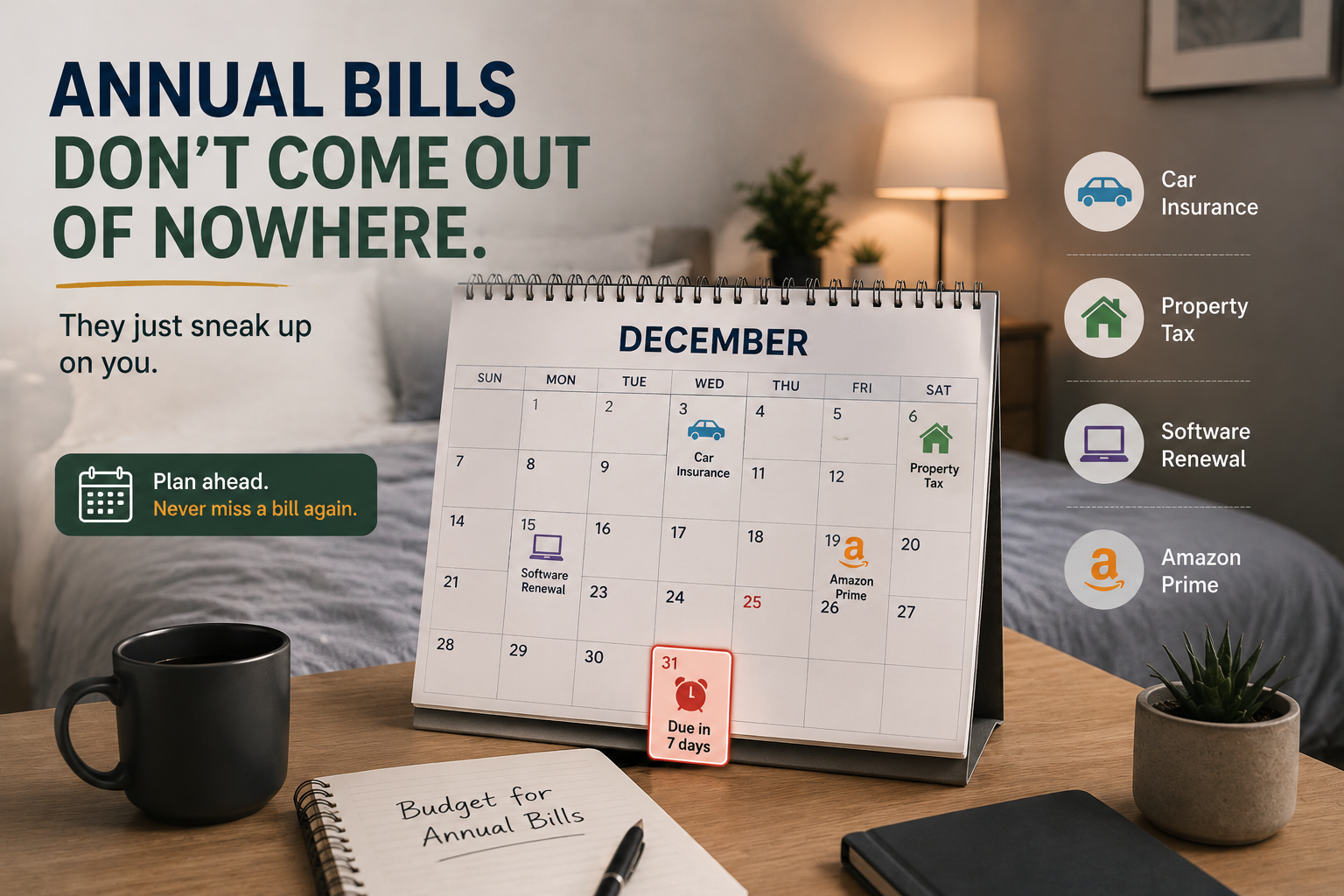
Your car insurance renewal arrives.
Property taxes are due.
Your annual Amazon Prime membership renews.
A holiday membership fee hits your bank account.
Suddenly, you’re scrambling to find money for an expense you knew was coming all along.
If this happens every year, you’re not bad with money—you’re simply treating annual bills like surprises instead of planned expenses. That’s where annual bills budgeting can make all the difference.
Let’s look at why these expenses always seem to catch us off guard and, more importantly, how to make sure they never do again.
1. Your Brain Thinks in Months, Not Years
Most people organize their finances around monthly expenses.
Rent.
Mortgage.
Utilities.
Groceries.
Those bills appear so often that they become automatic.
Annual expenses, however, only show up once every twelve months. By the time they return, they’ve completely disappeared from your mind.
The problem isn’t forgetfulness—it’s that your budget isn’t reminding you they exist.
2. Annual Bills Feel Too Far Away
When your insurance renewal is ten months away, it doesn’t feel urgent.
It’s easy to tell yourself,
“I’ll deal with it later.”
Unfortunately, later has a habit of arriving much faster than expected.
This is the same reason people often postpone saving for holidays or large purchases until the last minute. Looking at your finances one month at a time makes it difficult to prepare for expenses that don’t fit neatly into a monthly cycle.
3. You’re Only Budgeting for Recurring Monthly Expenses
Many budgets include categories like:
Housing
Utilities
Groceries
Transportation
Entertainment
But very few include expenses that happen once or twice a year.
That means your budget looks balanced… until an annual bill appears and throws everything off.
A complete budget should account for both predictable monthly expenses and predictable yearly ones.
4. Your Calendar Knows More Than Your Budget
Most annual bills don’t change dates very much.
Insurance renewals.
Property taxes.
Vehicle registration.
Professional memberships.
Software subscriptions.
The information already exists—you just haven’t connected it to your budget.
Adding renewal dates to your calendar takes only a few minutes but can prevent a lot of financial stress later.
5. Small Annual Bills Quietly Add Up
One annual bill might not seem like a problem.
But when several arrive around the same time, the total can be surprisingly large.
For example:
Car insurance
Home insurance
Amazon Prime
Domain renewals
Professional memberships
Antivirus software
Cloud storage subscriptions
Individually, they’re manageable.
Together, they can put serious pressure on your monthly budget.
6. You Don’t Have a Sinking Fund
One of the easiest ways to manage annual bills is with a sinking fund.
Instead of finding $600 all at once, save $50 each month.
By the time the bill arrives, the money is already waiting.
This approach works especially well for insurance premiums, holiday spending, home maintenance, and vehicle expenses because they’re predictable—even if they aren’t monthly.
7. Auto-Renewals Make the Problem Worse
Automatic renewals are convenient.
They’re also easy to forget.
Many people don’t realize a subscription has renewed until they notice the charge on their bank statement.
Reviewing your recurring subscriptions every few months makes it easier to decide which ones still deserve a place in your budget and which ones no longer provide enough value.
8. You’re Looking at Your Available Balance Instead of Your Future Expenses
Seeing money sitting in your checking account creates the illusion that it’s available to spend.
But some of that money already belongs to future bills.
When you mentally reserve money for upcoming annual expenses, you’re far less likely to spend it on impulse purchases today.
This is one reason budgeting feels so powerful—it helps you see tomorrow’s obligations while making today’s decisions.
9. You Haven’t Created an Annual Expense Checklist
Most people have a monthly to-do list.
Very few have a yearly financial checklist.
Creating a simple list of recurring annual expenses gives you one place to review everything that’s coming over the next twelve months.
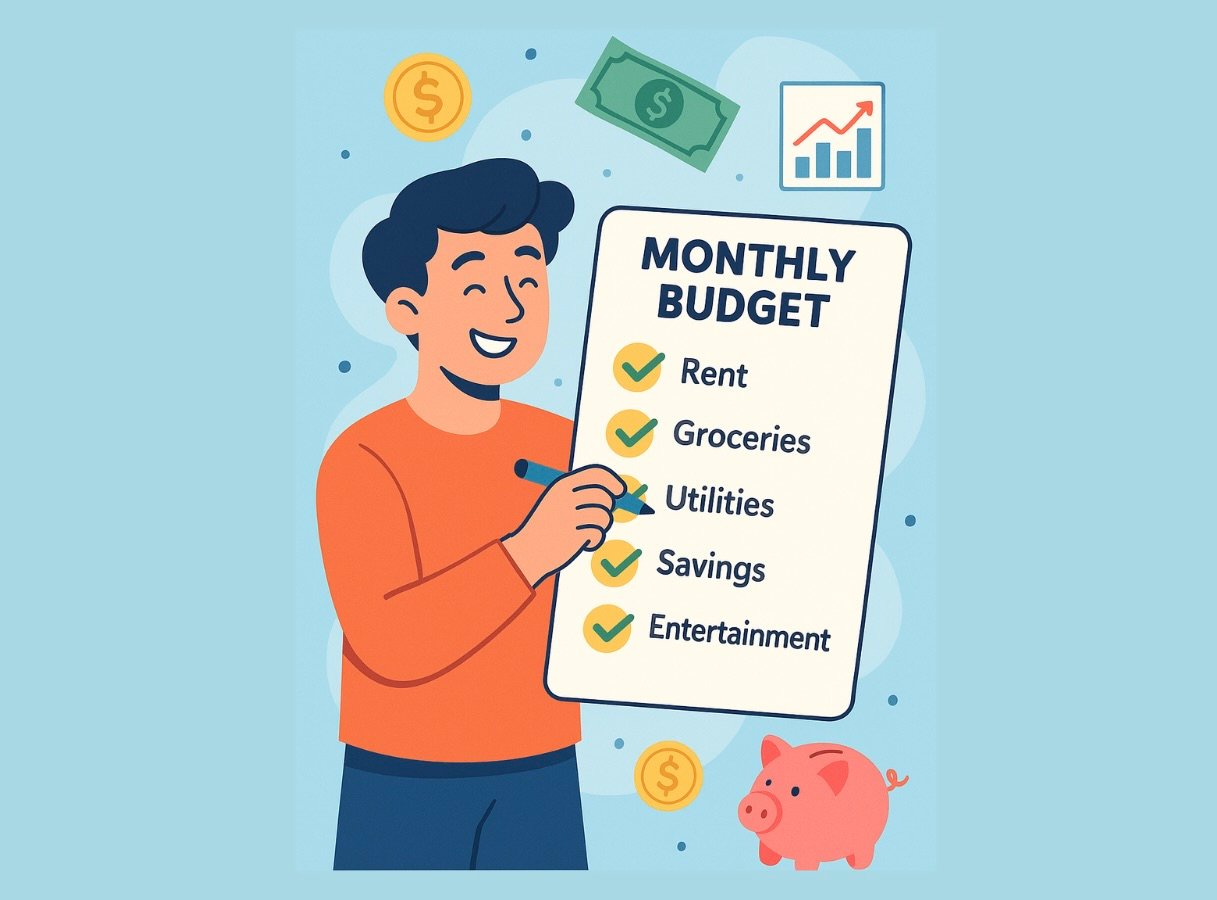
It’s the same idea behind a monthly budget checklist—except you’re planning for the entire year instead of just the next few weeks.
10. Waiting Until the Bill Arrives Is the Most Expensive Strategy
When an annual bill catches you off guard, you usually have three choices:
Dip into your emergency fund.
Put the expense on a credit card.
Delay paying it if possible.
None of these options are ideal.
Planning ahead gives you a fourth option:
Pay the bill comfortably because you’ve been preparing for it all year.
Common Annual Bills People Forget
Here are some of the most commonly overlooked yearly expenses:
Car insurance
Homeowners or renters insurance
Property taxes
Vehicle registration
Amazon Prime
Costco or warehouse memberships
Website domain renewals
Web hosting
Professional association fees
Software subscriptions
Cloud storage plans
Antivirus subscriptions
Annual medical checkups
Holiday gifts
School fees
Home maintenance
If even one of these made you think, “Oh, that’s coming up soon,” it’s probably worth adding to your budget today.
How to Stop Forgetting Annual Bills
A few simple habits can save you from expensive surprises:
List every annual bill in one place.
Divide each annual expense by 12.
Save that amount every month.
Add renewal dates to your calendar.
Review subscriptions before they renew.
Include annual expenses in your monthly budget review.
Revisit your annual expense list once a year to add anything new.
The goal isn’t to eliminate annual bills—it’s to make them feel just as routine as your monthly ones.
Final Thoughts
Annual bills aren’t unexpected—they’re simply easy to ignore because they don’t happen very often.
Good annual bills budgeting turns those once-a-year surprises into ordinary monthly savings goals. Instead of wondering how you’ll pay your insurance renewal or property taxes, you’ll already have the money set aside long before the due date arrives.
Whether you’re budgeting for monthly expenses or preparing for bills that only appear once a year, having a complete financial plan makes all the difference. Our Monthly Budget Calculator helps you organize your income, recurring expenses, savings goals, and future obligations so nothing catches you by surprise.