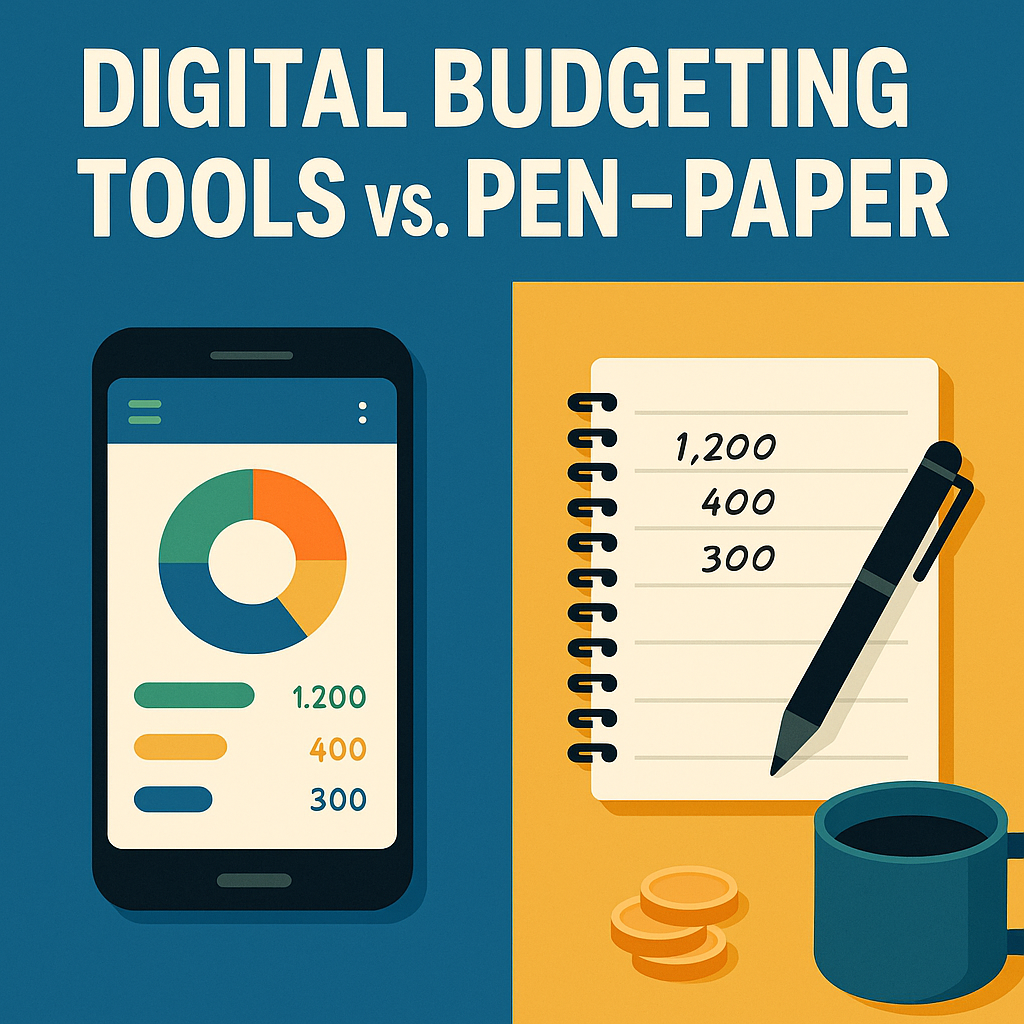
Budgeting has been around long before spreadsheets and online calculators existed. Our grandparents managed money with nothing more than notebooks, envelopes, and a bit of math. Today, digital tools — from budget calculators to spreadsheets and expense trackers — promise convenience and precision. But when it comes to actually saving money, do these modern tools beat the old-school pen-and-paper approach?
The Case for Digital Budgeting Tools
Digital budgeting tools like Excel, Google Sheets, and online monthly budget calculators have made it easier than ever to create and stick to a plan. These tools automatically total your income and expenses, show percentages, and even create charts that highlight how much you’re spending on wants vs. needs.
If you’re following the 50/30/20 rule or experimenting with systems like zero-based budgeting, digital tools do the heavy lifting. For people who live paycheck to paycheck, tools that update in real time can make a huge difference in avoiding overspending. And for couples or freelancers with irregular income, shared spreadsheets can prevent arguments about money.
The Case for Pen-and-Paper Budgeting
Despite all the digital convenience, pen-and-paper budgeting has some surprising advantages. Physically writing down your expenses creates a level of mindfulness that digital tools can’t always match. It’s similar to the envelope budgeting system, where you see the money disappear in real time.
Pen-and-paper is also free, distraction-free, and keeps you connected to the numbers. If you’re struggling with the psychology of overspending, jotting down each expense may make you think twice before swiping your card. For many people trying to stick to a budget without feeling miserable, the act of writing things down makes the process more intentional.
Which One Saves You More Money?
It depends on your style.
- If you’re detail-oriented but easily distracted, pen-and-paper may hold you more accountable.
- If you’re busy, managing irregular income, or need clear visuals, digital budgeting tools will likely help you save more.
Many people find a hybrid method works best: track core expenses in a spreadsheet for accuracy, but jot down discretionary spending (like dining or entertainment) by hand. This way, you get the best of both worlds — automation plus accountability.
Final Thoughts
Whether you use budgeting tools or pen-and-paper, the real win is consistency. The best system is the one you’ll actually stick with — because saving money isn’t about the tool, it’s about the habit.
I like what you guys are up too. Such clever work and reporting! Keep up the excellent works guys I have incorporated you guys to my blogroll. I think it’ll improve the value of my web site 🙂