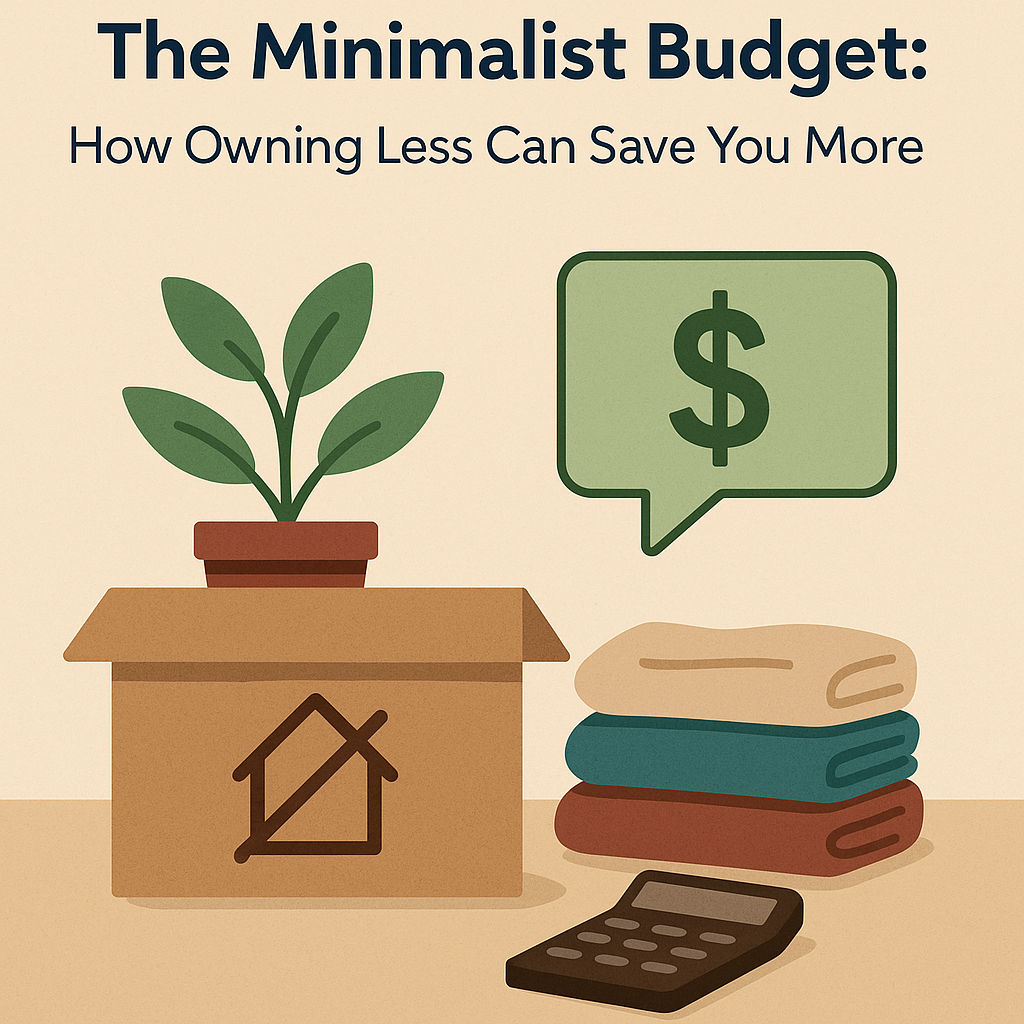
In a world that constantly pushes us to buy more, spend more, and accumulate more, adopting a minimalist mindset can feel revolutionary. But minimalism isn’t just about decluttering your home—it can be a powerful tool to take control of your finances. By focusing on owning less, you naturally spend less, save more, and find clarity in both your budget and your life.
What Is a Minimalist Budget?
A minimalist budget is not about depriving yourself. Instead, it’s a conscious approach to spending only on what truly matters. You prioritize essentials, eliminate unnecessary expenses, and create a streamlined financial plan that aligns with your values. Think of it as financial decluttering: just as you remove excess stuff from your home, you remove excess spending from your life.
How Minimalism Saves Money
- Less Stuff, Less Spending
When you commit to owning less, the urge to buy unnecessary items decreases. Impulse purchases, trendy gadgets, and excess clothing all shrink, leaving more money for savings and investments. - Lower Housing & Storage Costs
Fewer possessions mean smaller living spaces or less need for extra storage. Downsizing your home or reducing storage rental costs directly reduces your monthly expenses. - Simpler Lifestyle = Lower Bills
Minimalism encourages simplicity. You may cut down on subscription services, energy usage, and maintenance costs—all of which frees up cash in your budget. - Focus on Quality Over Quantity
Instead of buying many cheap items, minimalists invest in fewer, higher-quality products that last longer. Over time, this reduces replacement costs and contributes to long-term savings.
How to Create Your Minimalist Budget
- Track Your Expenses
Start by identifying what you spend money on every month. Categorize essentials vs non-essentials to see where you can cut. - Declutter Your Belongings
Go through your home and get rid of items you don’t use or need. You can even sell or donate them—turning clutter into cash. - Set Clear Priorities
Decide what’s truly important. Whether it’s experiences, travel, or saving for the future, your spending should reflect your values. - Automate Savings
Set up automatic transfers to your savings or investment accounts. When you spend less, saving becomes effortless. - Review Regularly
A minimalist budget isn’t a one-time setup. Check your spending monthly, adjust your priorities, and keep decluttering your financial habits.
Minimalist Budget Tips to Maximize Savings
- Limit new purchases to essentials only.
- Avoid “retail therapy” by planning your spending.
- Embrace digital subscriptions over physical products.
- Focus on free or low-cost experiences rather than material goods.
- Create a capsule wardrobe to reduce clothing expenses.
The Bigger Picture
Adopting a minimalist budget is about more than saving money—it’s about reclaiming your time, energy, and peace of mind. By owning less, you spend less and gain more freedom to focus on what truly matters: relationships, health, and personal growth.
I like this web site its a master peace ! .