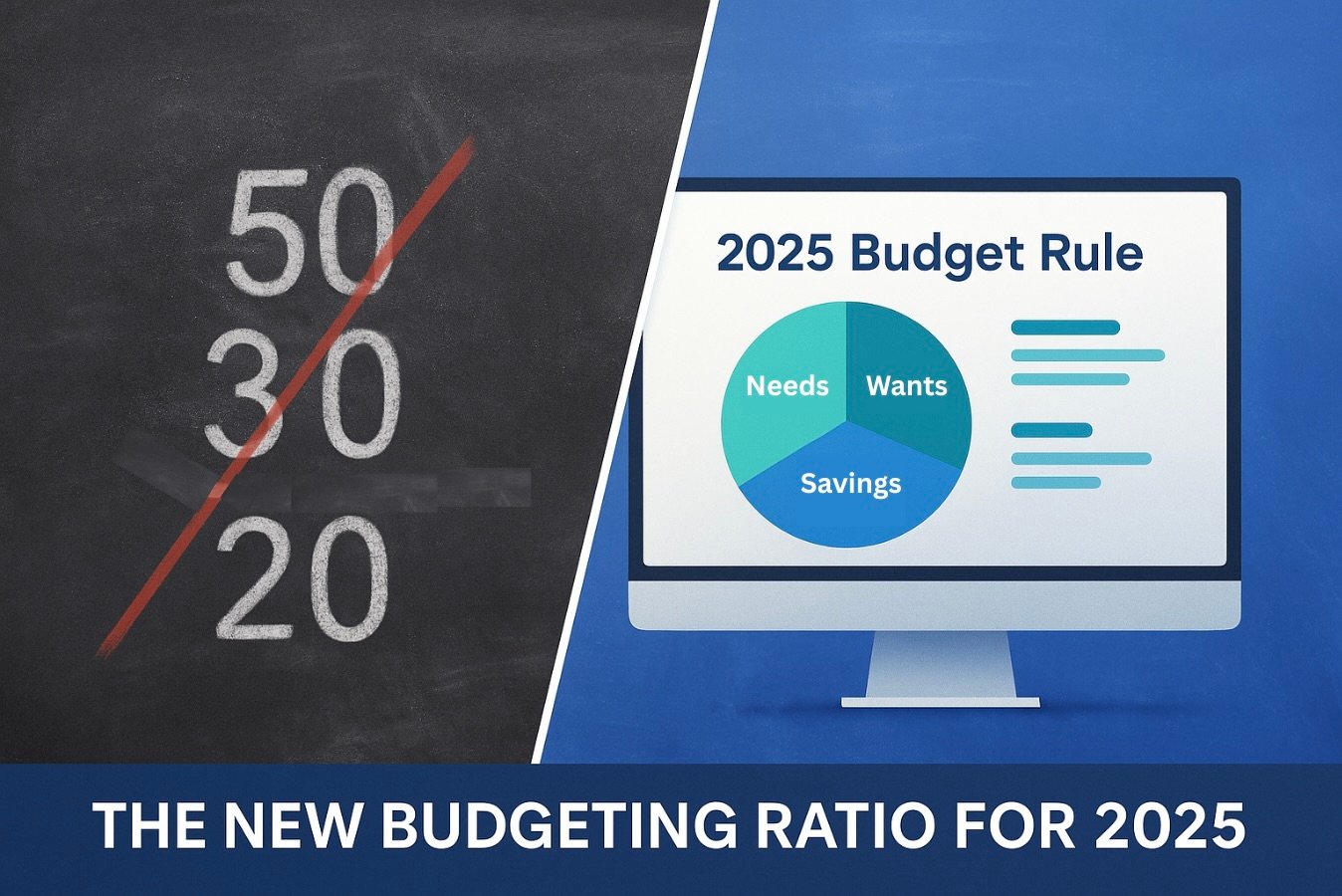
For years, the 50/30/20 rule has been the go-to budgeting formula — simple, elegant, and easy to remember: 50% of your income for needs, 30% for wants, and 20% for savings. But as the world changes and prices skyrocket, that formula is starting to feel outdated. In a high-inflation world, it’s becoming harder for most people to fit their expenses into those tidy categories.
If your rent alone eats up more than half your income, you’re not doing it wrong — the economy has simply changed. That’s why 2025 is all about a new budgeting rule — one that fits today’s reality, not yesterday’s math.
Why the 50/30/20 Rule No Longer Works
The original 50/30/20 rule was built for a time when living expenses were stable and predictable. But over the past few years, we’ve seen:
- Rents rise faster than wages.
- Groceries and fuel costs hit record highs.
- Interest rates and EMIs squeezing household budgets.
In 2025, many families spend 60–70% of their income just on essentials. That means the “30% for wants” or “20% for savings” part often gets wiped out before the month even ends.
The truth? Budgeting needs to evolve. You can’t use a 2000s-era formula in a 2025 economy. It’s time for a more flexible approach that adapts to your lifestyle, income, and city.
Introducing the New Budgeting Ratios for 2025
Financial experts and real-life savers are embracing new, practical ratios that reflect how people actually spend today. Here are a few that are gaining traction:
1. The 60/25/15 Rule
- 60% Needs: rent, groceries, utilities, insurance, debt payments
- 25% Wants: entertainment, dining, travel, subscriptions
- 15% Savings: emergency fund, retirement, investments
This version acknowledges that “needs” now take up a larger portion of income, while still leaving space for fun and future security.
2. The 70/20/10 Rule
This ratio works well for people in expensive cities or with variable incomes.
- 70% Needs: core living expenses
- 20% Savings: focus on building stability first
- 10% Wants: minimalist lifestyle, big on discipline
It’s perfect for those prioritizing debt repayment or recovering from high-interest loans.
3. The Flexible Budget Ratio
Instead of sticking to a fixed rule, more people are adopting adaptive budgeting — adjusting their percentages every few months based on real spending data.
Using a monthly budget calculator like the one on our site helps visualize where your money truly goes and lets you create a custom ratio that fits your life.
Budgeting for a High-Inflation World
The key takeaway is not about following a single perfect formula — it’s about staying realistic.
Inflation changes the math, but not the mission. The goal is still the same: to control your money before it controls you.
Here are a few personal finance tips that work in 2025’s high-cost environment:
- Automate savings — even a small amount is progress.
- Cut silent costs like unused subscriptions or impulse online buys.
- Track your expenses visually using a budgeting tool — seeing your data makes budgeting easier.
- Rebalance quarterly — adjust your ratios as prices and income change.
Find Your Own Perfect Ratio
There’s no universal rule anymore — and that’s actually a good thing. Everyone’s income, city, and lifestyle are different. The smartest move is to test different ratios until one feels sustainable.
You can use our free Monthly Budget Calculator to:
- See your expenses and income distribution in real time.
- Experiment with different budgeting ratios.
- Visualize your spending in an easy pie chart format.
Try adjusting your budget today and find the ratio that actually works for your version of 2025.
Final Thoughts
The 50/30/20 rule isn’t “dead” — it’s just evolving. Think of it as the foundation for smarter, more realistic budgeting. Whether you go with 60/25/15, 70/20/10, or your own custom plan, what matters is staying flexible and intentional.
Budgeting in 2025 isn’t about perfection — it’s about progress. Start tracking, testing, and tweaking your way to financial balance with the Monthly Budget Calculator — your personal finance companion for the modern world.
It’s a shame you don’t have a donate button! I’d without a doubt donate to this fantastic blog! I suppose for now i’ll settle for bookmarking and adding your RSS feed to my Google account. I look forward to brand new updates and will share this blog with my Facebook group. Talk soon!