
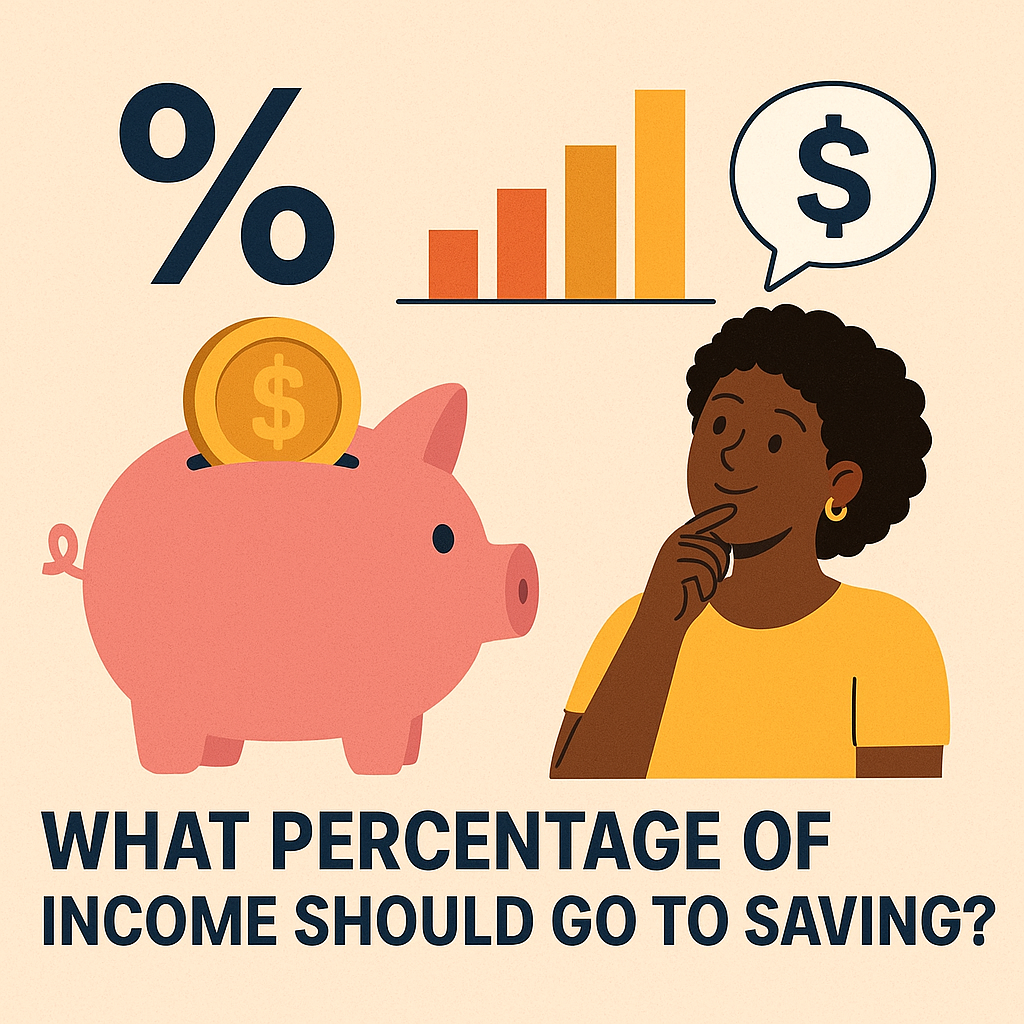
Saving money sounds simple, but most people aren’t sure how much they should actually set aside. Is 5% enough? Should you aim for 50%? The truth is, the “right” percentage depends on your goals, lifestyle, and income — but there are some proven guidelines that can make the process a lot easier.
One of the most popular methods is the 50/30/20 rule: 50% of your income goes to needs, 30% to wants, and 20% to savings (which includes retirement, emergency funds, and investments). Following this formula helps you grow your savings without feeling like you’re cutting out every small joy in life.
However, if you want to fast-track financial freedom, experts recommend pushing your savings rate higher — closer to 25–30% if your income allows. Even bumping your savings up by just 5% can make a massive difference in the long run thanks to compound growth.
The bottom line: there’s no one-size-fits-all number, but aiming for at least 20% of your income toward savings is a great starting point. From there, adjust based on your goals — whether that’s building an emergency cushion, buying a home, or retiring early. You can simply use a budgeting tool like monthly budget calculator to calculate your 20% savings amount.