
In an era packed with budgeting tools, financial tech apps, and spreadsheet templates, it’s easy to assume that the latest-method is always the best. But what if the most effective money rule isn’t new at all? Decades before smartphones and fintech dashboards, households in the 1940s followed a simple rule that may still outperform many modern budgeting systems — especially for everyday savers and budgeters.
What Was the 1940s Money Rule?
The 1940s money rule boiled down to three straightforward principles:
- Spend less than you earn.
- Save first, spend later.
- Live within your means with intentional consumption.
This mindset developed during the economic transformations of the Great Depression and World War II, when rationing and resource scarcity weren’t options but necessities. Rather than allocating every rupee into dozens of budget categories, families focused on discipline, restraint, and prioritizing needs over wants.
How Modern Budgeting Differs
Today’s popular budgeting frameworks — like the 50/30/20 rule that divides income into needs, wants, and savings — offer structure and clarity. Many apps take it further by tracking every purchase and auto-categorizing expenses. While these tools are helpful, they often focus after income arrives, asking users to divide and monitor rather than build savings habits upfront.
That’s where the old rule shines: it flips the script by asking a different question — not “How should I split this month’s income?” but “Do I truly need to spend this money at all?”
Why the 1940s Rule Often Outperforms Modern Systems
1. Simplicity Reduces Decision Fatigue
Modern budgeting apps can be overwhelming: dozens of categories, alerts for every coffee or snack, daily tracking, and constant adjustments. The 1940s mindset avoids this clutter by keeping the focus on one core goal: save first. When you strip away needless complexity, making choices becomes easier and reduces the mental load associated with money management.
2. It Tackles Behavior Over Numbers
Budgeting isn’t just math — it’s psychology. Many people fail not because they don’t know where their money is going, but because they haven’t addressed the behaviors that lead to overspending. The 1940s rule emphasizes self-control and intention before categorization. It forces a mindset shift: “Do I really need this?”
3. Encourages Automatic Savings
Instead of saving what’s left after spending, this rule suggests saving before anything else. Modern financial pros call this concept “reverse budgeting” or “pay yourself first.” Essentially, you automatically transfer a portion of your income to savings before any other spending — leaving only the remainder for everything else. This makes saving automatic, not optional.
Actionable Ways to Use the 1940s Money Rule Today
Here’s how you can take the spirit of this old-school strategy and apply it to modern financial life:
1. Save First, Spend What’s Left
Set up automatic transfers so a portion of your income goes directly into savings the day you get paid. Once the money is gone from your checking account, you won’t miss it — and your savings will grow without extra effort.
2. Use Digital or Cash “Envelopes”
The 1940s households may have used jars or envelopes for different categories. You can do the same with separate bank sub-accounts or budgeting tools that let you assign money to different buckets (like groceries, bills, entertainment, etc.). Only spend what’s in the envelope — that creates clear limits.
3. Ask Better Questions Before You Buy
Instead of tracking every rupee, start with a simple pause: “Do I need this?” If the answer isn’t a clear “yes,” consider postponing the purchase for 24 hours. This helps curb impulses without complicated tracking.
4. Practice Contentment and Frugality
The 1940s habit of making do with what you have still has relevance today. Reuse, repair, repurpose, and stretch resources whenever possible. A minimalist mindset around possessions can lead to fewer unnecessary purchases and more savings.
Comparing the Old Rule With Popular Modern Methods
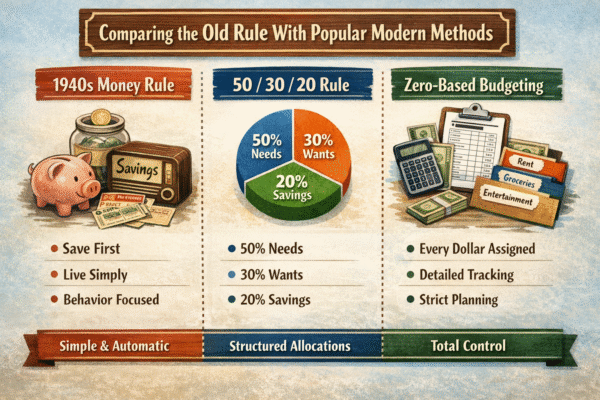
Each approach has value, but the 1940s rule stands out for its simplicity and behavioral focus — especially for people overwhelmed by modern budgeting tools.
Is the 1940s Money Rule Right for You?
If you’ve struggled with budgeting apps or feel burned out by tracking every expense, this old-school mindset could be refreshing and effective. It won’t provide a perfectly detailed spreadsheet, but it will help you build strong saving habits, curb impulsive spending, and stay focused on the bigger financial goal: spending less than you earn.
At its core, the best budget is the one you actually stick to — and for many people, starting with simple behavior changes is far more sustainable than complicated tracking. Whether you use a blend of the 1940s rule with modern tools or adopt its principles outright, the result can be the same: growing savings, reduced stress, and better financial control.