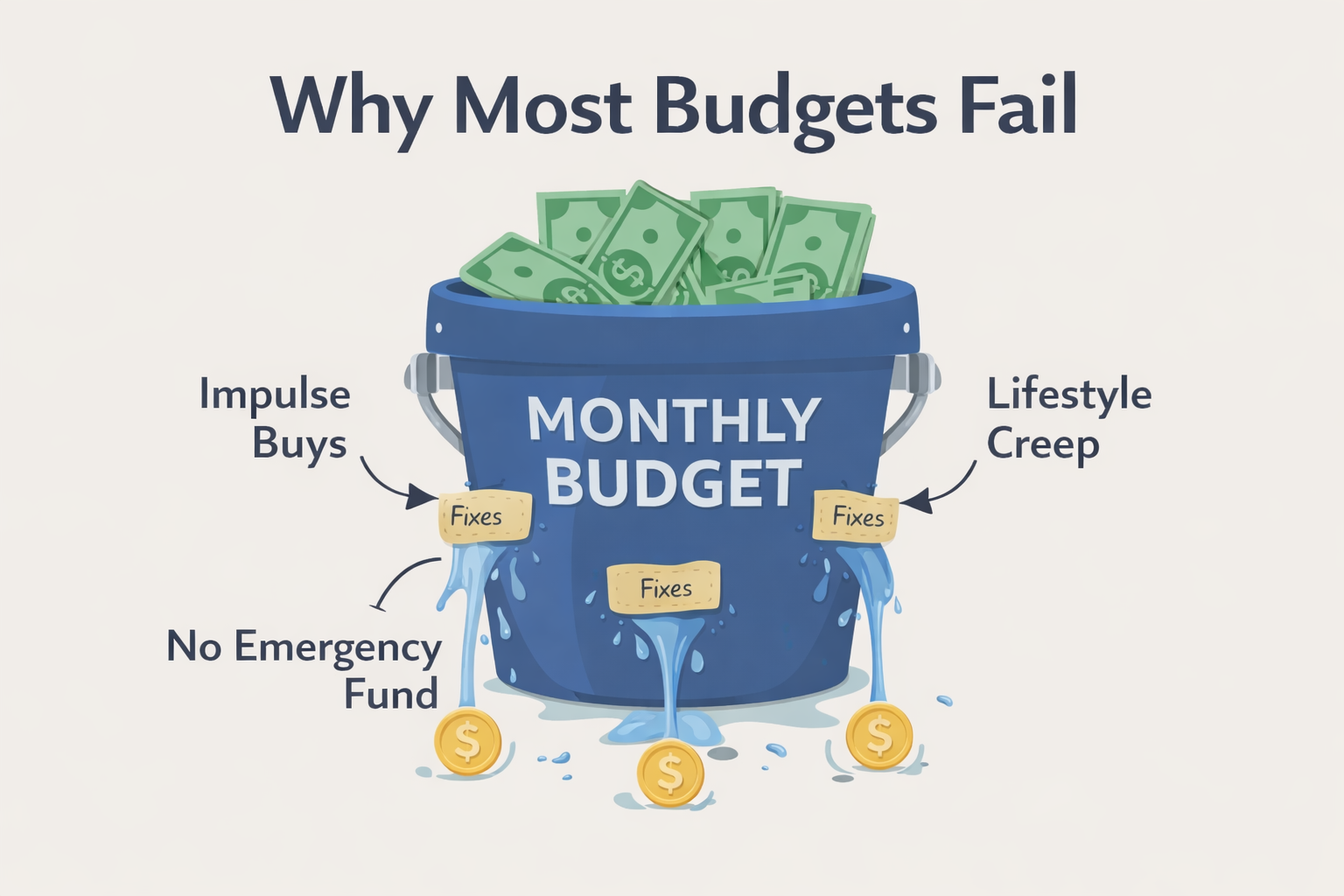
Many people start budgeting with good intentions, yet most budgets fail within a few weeks. The problem isn’t a lack of discipline — it’s that most budgets are built in a way that doesn’t match real life.
Understanding why budgets fail is the first step to creating one that actually works long term.
1. Budgets Fail Because They’re Too Restrictive
One of the biggest budgeting mistakes is cutting spending too aggressively. When every dollar is tightly controlled, the budget becomes exhausting to follow.
How to fix it:
Build flexibility into your budget. Leave room for dining out, small treats, and unexpected expenses. A sustainable budget is better than a perfect one.
2. People Forget About Irregular Expenses
Most budgets only include monthly bills, ignoring costs like car repairs, medical expenses, gifts, or annual subscriptions. When these expenses show up, the budget breaks.
How to fix it:
Plan for irregular expenses by setting aside a small amount each month. Treat them as predictable, not surprises.
3. Budgets Aren’t Reviewed or Updated
Life changes — income changes, expenses rise, and priorities shift. A budget that isn’t reviewed quickly becomes outdated.
How to fix it:
Review your budget at least once a month. Even a 10-minute check-in can prevent overspending and keep you aligned with your goals.
4. Tracking Stops After the First Month
Many people create a budget but stop tracking expenses. Without tracking, spending decisions are based on guesswork.
How to fix it:
Track your expenses consistently, even if it’s just once or twice a week. Awareness alone improves financial decisions.
5. Budgets Focus Only on Cutting Costs
Budgets that focus only on reducing expenses feel punishing and lead to burnout. Over time, people abandon them completely.
How to fix it:
Balance your budget between spending, saving, and enjoying life. A budget should support your lifestyle — not fight it.
How to Make Your Budget Work Long-Term
A successful budget is:
- Realistic, not strict
- Flexible, not rigid
- Reviewed regularly
- Built around your actual spending habits
Using a structured monthly budget tool can make tracking easier and help you adjust before small problems become big ones.
Final Thoughts
Most budgets fail not because people are bad with money, but because the budget itself isn’t designed for real life. When you build a flexible, realistic budget and review it regularly, budgeting becomes less stressful and far more effective.
Fix the structure — and the results will follow.