If you’ve been looking for a simple budgeting method, you’ve probably come across the popular 50/30/20 rule. But it’s not the only budgeting strategy worth considering. Another approach that’s gaining attention is the 70/20/10 budget rule—a straightforward system that prioritizes saving while keeping your spending simple.
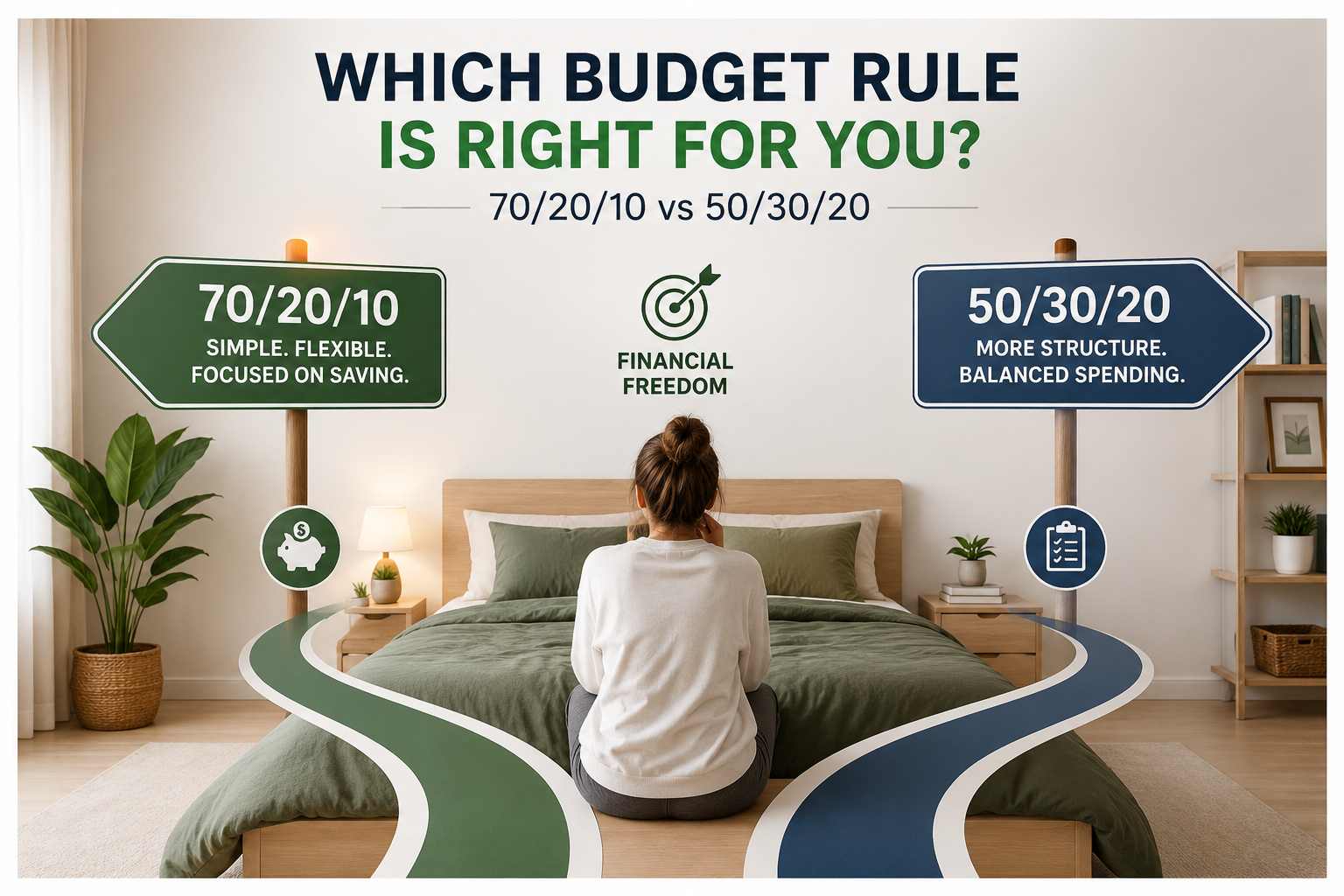
So, is the 70/20/10 budget rule better than the 50/30/20 rule? The answer depends on your financial goals, income, and lifestyle. In this guide, we’ll explain how the 70/20/10 budget works, who it’s best suited for, and how it compares to the better-known 50/30/20 method.
What Is the 70/20/10 Budget Rule?
The 70/20/10 budget rule divides your after-tax income into three categories:
70% for living expenses
20% for savings and investments
10% for debt repayment or charitable giving
Unlike more detailed budgeting systems, this rule doesn’t require you to separate every expense into “needs” and “wants.” Instead, all of your day-to-day spending fits into the 70% category, making it easier to follow.
Here’s a quick breakdown:
Category
Percentage
Living Expenses
70%
Savings & Investments
20%
Debt Repayment or Giving
10%
How Does the 70/20/10 Budget Work?
Imagine you bring home $5,000 per month after taxes.
Following the 70/20/10 rule, your budget would look like this:
$3,500 (70%) for rent, groceries, transportation, insurance, utilities, entertainment, dining out, and other everyday expenses.
$1,000 (20%) toward your emergency fund, retirement accounts, investments, or other savings goals.
$500 (10%) for paying down debt faster or making charitable donations.
The biggest advantage is that you don’t have to constantly decide whether a purchase counts as a “need” or a “want.” As long as your total spending stays within the 70%, you’re on track.
What Counts as Living Expenses?
The 70% spending category usually includes:
Housing
Groceries
Utilities
Transportation
Insurance
Dining out
Shopping
Entertainment
Subscriptions
Childcare
Why Many People Like the 70/20/10 Rule
There are several reasons this budgeting method has become popular.
It’s Simple
Many people give up on budgeting because it feels too complicated. Since the 70/20/10 rule has only three categories, it’s easy to remember and maintain.
It Prioritizes Saving
Saving 20% of your income can help you build financial security much faster. Whether you’re creating an emergency fund or investing for retirement, consistently setting aside money each month makes a significant difference over time.
It Encourages Responsible Debt Management
The dedicated 10% category helps you avoid ignoring debt while still allowing room for generous giving if you’re debt-free.
When the 70/20/10 Budget Works Best
This budgeting style is often a good fit if you:
Have a stable monthly income.
Want a simple budgeting system.
Already have your essential expenses under control.
Want to save aggressively.
Don’t enjoy tracking dozens of spending categories.
It’s especially useful for people who find detailed budgets overwhelming.
Potential Drawbacks
No budgeting system is perfect.
Some drawbacks include:
It Doesn’t Separate Needs and Wants
Since everything falls into one spending bucket, it’s possible to overspend on discretionary purchases without realizing it.
It May Not Work for High Living Costs
If you live in an expensive city, housing alone might consume more than 40% of your income. Keeping all expenses within 70% can become difficult.
Saving 20% Isn’t Always Realistic
If you’re living paycheck to paycheck, saving 20% immediately may not be possible. In that situation, starting with a smaller percentage is still better than saving nothing.
70/20/10 vs. 50/30/20: Which Is Better?
Here’s how the two methods compare.
Feature
70/20/10
50/30/20
Categories
3
3
Separates Needs and Wants
No
Yes
Savings Target
20%
20%
Simplicity
Excellent
Good
Best for Beginners
Yes
Yes
Expense Tracking
Minimal
Moderate
The biggest difference is how spending is organized.
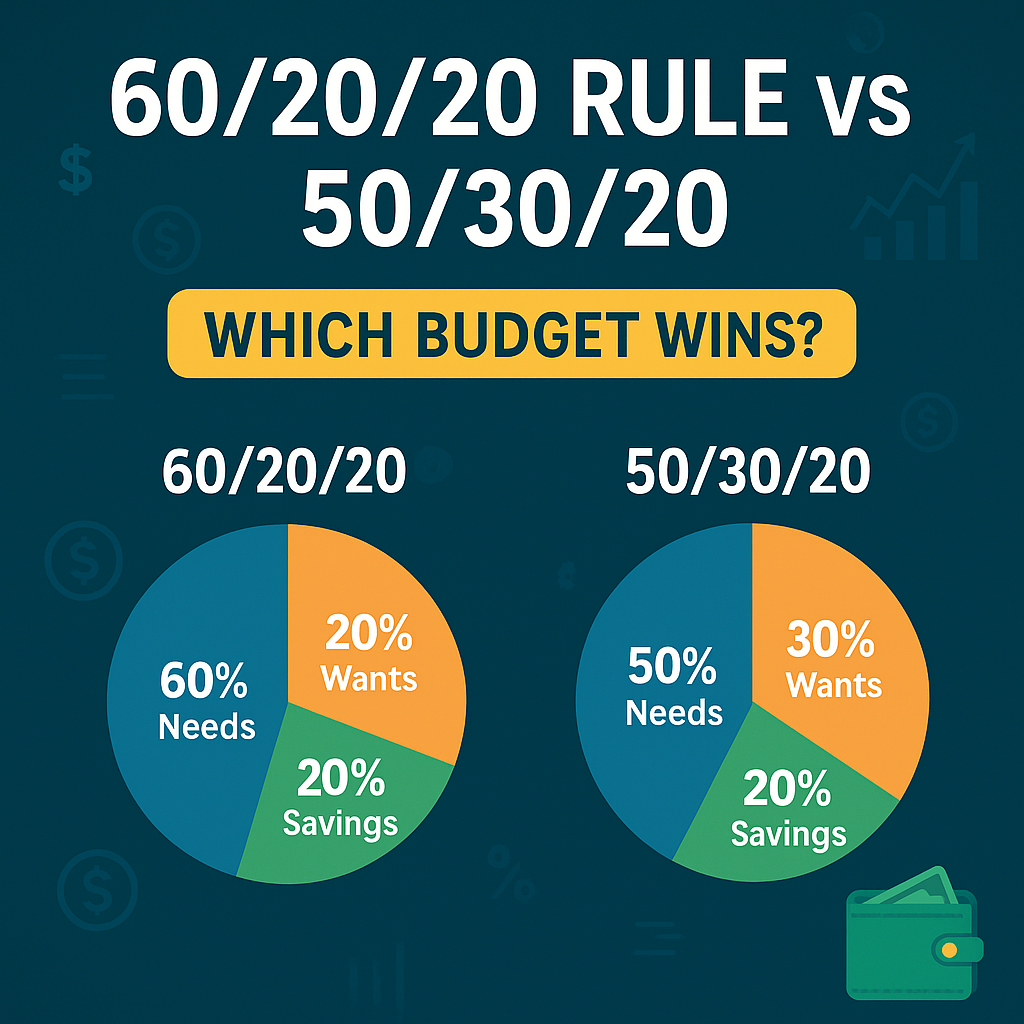
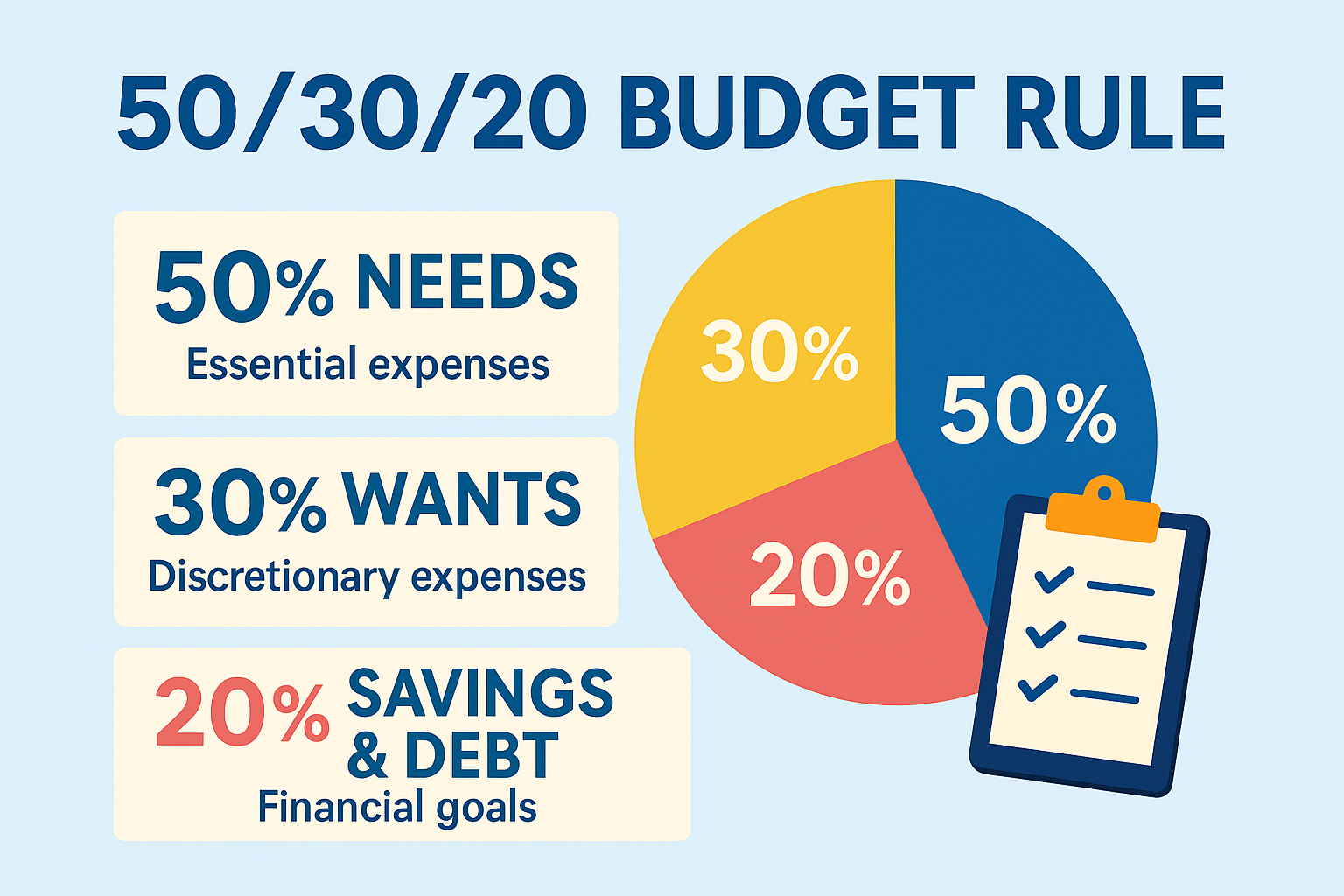
The 50/30/20 rule divides spending into:
50% Needs
30% Wants
20% Savings
The 70/20/10 rule combines needs and wants into one category.
Which Budget Rule Should You Choose?
Choose the 70/20/10 budget if you:
Prefer simplicity.
Don’t want to track every purchase.
Already have reasonable spending habits.
Want flexibility within your spending.
Choose the 50/30/20 budget if you:
Tend to overspend.
Want clearer spending limits.
Need help distinguishing necessities from discretionary purchases.
Like more structure.
Neither budget is universally better—the best one is the one you’ll actually follow consistently.
Tips for Making the 70/20/10 Budget Work
To get the most from this budgeting method:
Automate your savings as soon as you get paid.
Review your spending every month.
Increase your savings percentage whenever your income rises.
Avoid lifestyle inflation after receiving raises.
Adjust the percentages temporarily if you’re paying off high-interest debt.
Even a quick monthly review can reveal spending patterns before they become problems. A simple budget check-in often prevents the common mistakes that derail long-term financial progress.
Final Thoughts
The 70/20/10 budget rule is proof that budgeting doesn’t have to be complicated. By keeping your plan simple, prioritizing savings, and leaving room for flexibility, it becomes much easier to stick with your financial goals over the long term.
If you enjoy detailed planning and want tighter control over your spending, the 50/30/20 budget or 60/20/20 budget may suit you better. But if you’re looking for a low-maintenance budgeting system that still encourages healthy money habits, the 70/20/10 rule is an excellent place to start.
Whichever method you choose, consistency matters more than perfection. Building a budget you can realistically follow month after month will do far more for your finances than chasing the “perfect” budgeting rule.