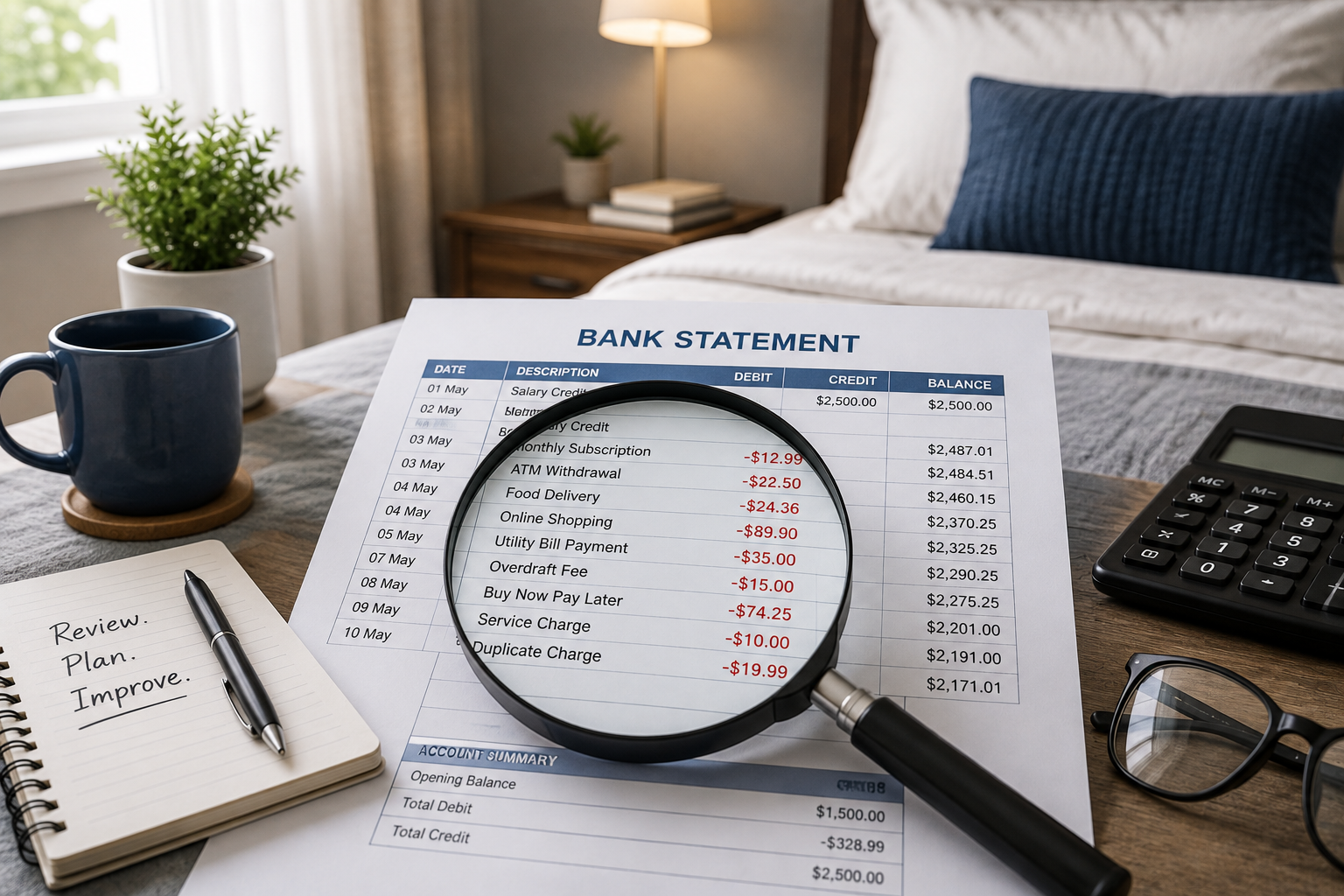
Most people only check their bank statement to confirm their paycheck arrived or to see their account balance. Once that’s done, the statement is quickly forgotten until the next month.
But your bank statement can reveal far more than where your money went. It can expose spending habits, hidden fees, financial blind spots, and warning signs that slowly chip away at your financial health. Learning to recognize these red flags can help you save money, reduce stress, and make smarter financial decisions.
1. Frequent Overdraft or Insufficient Funds Fees
Seeing one overdraft fee isn’t necessarily a cause for concern. Seeing them repeatedly is.
Regular overdraft charges often indicate that your spending is outpacing your income or that you’re not keeping track of your available balance. These fees can add up quickly and make an already tight budget even harder to manage.
Creating a realistic spending plan can help prevent these avoidable charges before they become a recurring problem.
2. Subscriptions You Forgot About
Monthly streaming services, fitness apps, software subscriptions, cloud storage, and premium memberships often continue charging long after you’ve stopped using them.
Many people are surprised to discover they’re paying for multiple services they barely remember signing up for.
Review every recurring payment on your statement and ask yourself whether it still provides value. Canceling even a few unused subscriptions can free up money every month.
3. Small Purchases That Add Up
A $5 coffee.
A $12 lunch.
A $9 online purchase.
None of these seem expensive on their own, but dozens of small transactions throughout the month can quietly consume hundreds of dollars.
Food delivery apps are convenient, but convenience often comes with delivery fees, service charges, and tips.
If your statement is filled with restaurant and delivery transactions, it may be worth calculating how much you’re actually spending each month. Cooking just a few extra meals at home can make a noticeable difference.
5. Rising Utility Bills
Utility costs naturally fluctuate, but a steady increase without a clear explanation deserves attention.
Compare your recent statements to previous months. If expenses continue rising, consider ways to reduce energy usage or check for billing errors before costs become the new normal.
6. Buy Now, Pay Later Installments
Buy Now, Pay Later (BNPL) services make purchases feel affordable because payments are spread over time.
The problem starts when several installment plans overlap. Your bank statement may show multiple small payments that collectively take a large bite out of your monthly budget.
Saving for larger purchases instead of financing them can reduce financial pressure over time.
7. ATM Fees Everywhere
Using out-of-network ATMs occasionally isn’t a problem.
Paying ATM fees every week is.
These small charges may seem insignificant, but repeated fees are an easy expense to eliminate by planning cash withdrawals or using your bank’s ATM network.
8. Duplicate or Suspicious Transactions
Unexpected duplicate charges or unfamiliar merchants should never be ignored.
Mistakes happen, and unauthorized transactions can occur even if your card never leaves your wallet. Reviewing your statement regularly helps you spot problems early before they become more difficult to resolve.
9. Spending That Doesn’t Match Your Priorities
Your bank statement tells a story.
If you say saving money is important but most discretionary spending goes toward shopping, entertainment, or impulse purchases, your financial habits may not align with your goals.
You don’t need to analyze every transaction in detail. Instead, spend a few minutes each month looking for patterns.
Pay special attention to:
Recurring subscriptions
Bank fees
Large unexpected purchases
Duplicate transactions
Restaurant and delivery spending
Shopping trends
Automatic savings transfers
Credit card payments
Looking for patterns rather than individual purchases makes it much easier to identify areas for improvement.
Final Thoughts
Your bank statement is more than a record of where your money went—it’s a snapshot of your financial habits.
By reviewing it regularly, you can uncover hidden spending, eliminate unnecessary expenses, and catch problems before they become costly. Small changes today can lead to healthier finances tomorrow, and your monthly statement is one of the best tools for staying on track.