You don’t need a six-figure salary, a complicated investment strategy, or a perfectly optimized budget to improve your finances. In many cases, the biggest difference comes from making a few smart decisions consistently.
The goal isn’t to become financially perfect overnight. It’s to create a system that gives you more control over your money, reduces unnecessary stress, and gradually puts you in a stronger financial position.
Here are eight money moves worth making if you want to give your finances a serious upgrade.
1. Get Completely Honest About Where Your Money Goes
Before you can improve your finances, you need to know what you’re actually working with.
Start by looking at your income, fixed bills, subscriptions, debt payments, savings, and everyday spending. Don’t estimate. Pull up your bank and credit card statements and use real numbers.
This exercise can reveal spending that barely registers when it happens individually but becomes significant over an entire month. It also gives you a starting point for creating a realistic monthly budget instead of one based on what you think you spend.
A budget isn’t supposed to restrict every purchase. It’s simply a plan for deciding where your money should go before it disappears.
2. Give Every Dollar a Job
Once you understand your cash flow, start assigning your money a purpose.
That might mean covering necessities first, setting aside money for savings, paying down debt, and leaving room for things you genuinely enjoy. A framework such as the 50/30/20 budget rule can provide a useful starting point, although your personal numbers may require adjustments.
The important part is that your spending reflects your priorities.
If you consistently reach the end of the month wondering where your paycheck went, your problem may not be that you need to earn dramatically more. You may simply need a clearer system for directing the money you already have.
3. Automate the Things You Keep Forgetting
Good financial habits become much easier when you don’t have to rely on motivation.
Set up automatic transfers for savings, automatic bill payments where appropriate, and recurring investment contributions if they fit your financial situation. Even small amounts can become meaningful when they’re moved consistently.
Automation also removes one of the biggest obstacles to saving: having to make the decision every single month.
Think of it as putting part of your finances on autopilot. Your future self gets paid before your spending habits have a chance to claim everything.
4. Attack High-Interest Debt
High-interest debt can quietly work against almost every other financial goal.
Credit card balances are particularly problematic because interest can continue accumulating while you’re making purchases and carrying balances at the same time. If you have expensive debt, look at how much interest you’re paying and decide which balances deserve the most attention.
Two common approaches are the debt avalanche, which prioritizes the highest interest rate, and the debt snowball, which focuses on the smallest balance first.
The mathematically efficient choice isn’t always the psychologically easiest one. What matters most is choosing a method you can stick with and stopping the cycle of adding new high-interest debt.
5. Build a Cash Buffer Before Life Forces You To
An emergency fund isn’t exciting—until something goes wrong.
A broken appliance, unexpected medical bill, job interruption, or major car repair can turn into credit card debt when you don’t have cash available to handle it.
You don’t necessarily need to build a huge emergency fund immediately. Start with an amount that feels achievable and increase it over time.
Once you have some breathing room, continue building toward a larger reserve based on your income, expenses, job stability, and personal circumstances.
The purpose isn’t to make money from the emergency fund. It’s to prevent an unexpected expense from becoming a financial crisis.
6. Look for Ways to Increase Your Income
Cutting expenses has a limit. You can only eliminate so many subscriptions and restaurant meals before you’ve squeezed most of the savings out of your budget.
Increasing income gives you another lever to pull.
That could mean negotiating a raise, applying for a better-paying position, developing a valuable skill, taking on freelance work, or building a small side income stream.
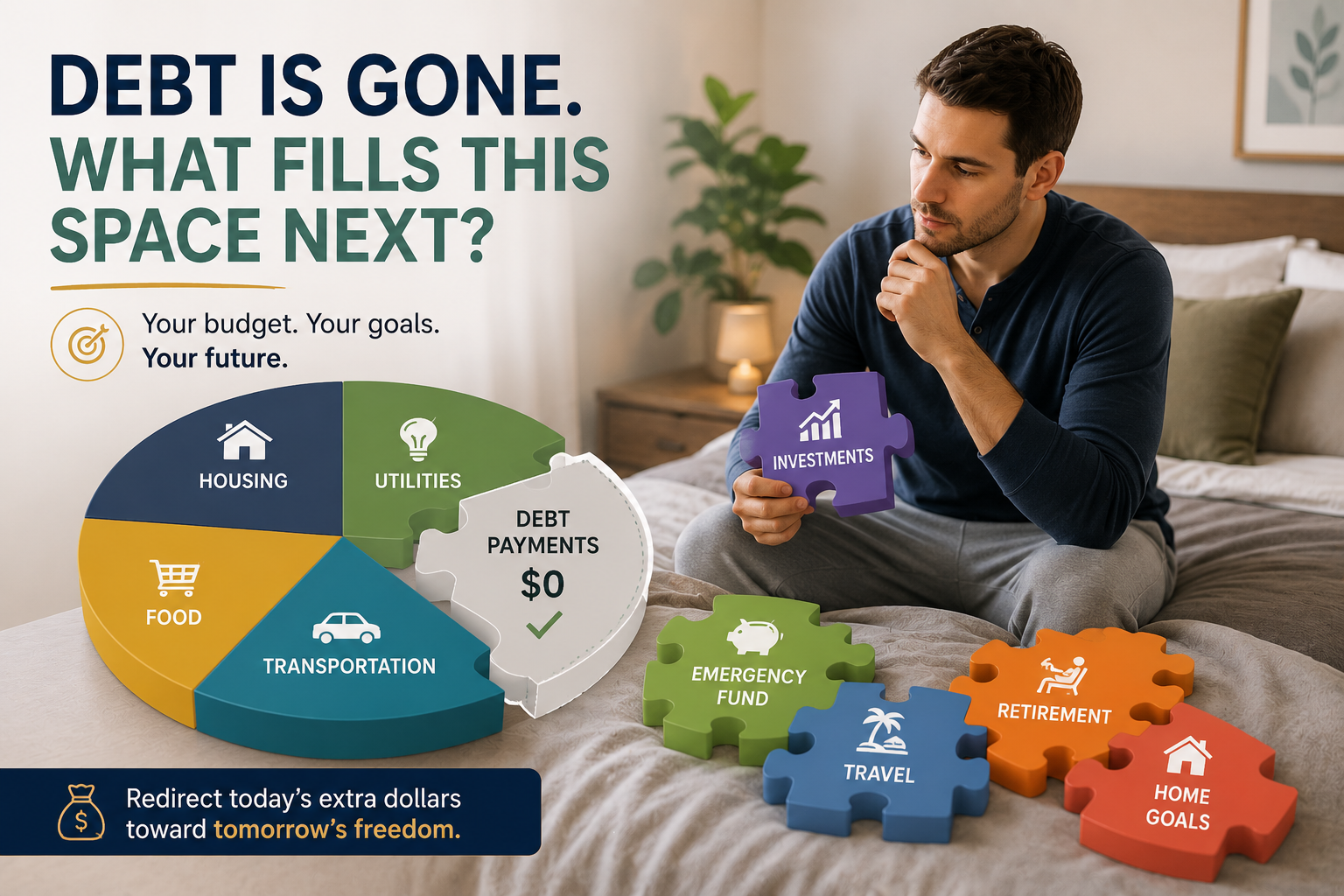
The key is not to automatically spend the extra money once you earn it. If your income increases by $500 a month and your lifestyle immediately absorbs the entire amount, your financial situation may barely improve.
Directing even part of an income increase toward debt, savings, or investments can dramatically change the long-term result.
7. Start Investing With a Long-Term Mindset
Saving protects your money. Investing gives it an opportunity to grow.
Once you’ve established a reasonable financial foundation and dealt with pressing high-interest debt, investing can become an important part of building long-term wealth.
You don’t need to predict which stock will explode next or constantly trade your portfolio. For many people, diversified investments and consistent contributions are far more practical than trying to outsmart the market.
The biggest advantage you have is often time. Money invested consistently over many years can benefit from compound growth, allowing previous returns to generate additional returns.
The exact investments you choose should depend on your goals, timeline, risk tolerance, and overall financial situation.
8. Give Your Finances a Regular Reality Check
A financial plan isn’t something you create once and then forget about.
Your income can change. Rent can increase. A new car payment can appear. Your family situation can change. Your priorities can shift.
That’s why it’s useful to review your finances regularly.
You don’t need to spend an entire weekend analyzing every transaction. A short monthly check can be enough to see whether your spending is still under control, whether you’re making progress toward your goals, and whether something needs to change.
Think of it like a financial maintenance check. Small adjustments are usually easier than waiting until your finances become a mess that requires a major reset.
The Real Financial Upgrade Is Consistency
There isn’t one secret move that suddenly transforms your financial life.
The bigger advantage comes from combining several ordinary habits: knowing where your money goes, spending intentionally, automating savings, controlling expensive debt, maintaining an emergency cushion, increasing your income, investing consistently, and reviewing your progress.
You don’t have to implement everything perfectly at once. Pick the step that would make the biggest difference to your current situation and start there.
Then keep going.
A stronger financial future is usually built through a series of relatively boring decisions repeated for a very long time. And that’s actually good news—it means you don’t need to be wealthy today to start becoming better with money.