In a world dominated by debit cards, mobile wallets, and online banking, keeping physical cash at home may seem old-fashioned.
But when power outages, severe weather, internet disruptions, or unexpected emergencies occur, cash can quickly become one of your most valuable assets.
So, how much cash should you actually keep at home?
The answer depends on your expenses, household size, and comfort level, but most people don’t need thousands of dollars hidden under the mattress.
Here’s how to determine the right emergency cash amount for your situation.
Why Keep Cash at Home?
Physical cash provides immediate access to money when electronic payment systems aren’t available.
Cash can be useful during:
Power outages
Internet disruptions
Natural disasters
Banking outages
Evacuations
Unexpected emergencies
Having some cash on hand can give you peace of mind and help you cover essential expenses when digital payments fail.
How Much Cash Should You Have at Home?
Financial experts generally recommend keeping enough cash to cover several days to one week of essential expenses.
For many households, that means somewhere between:
$300 to $1,000
However, the ideal emergency cash amount depends on your circumstances.
Single Person
A few hundred dollars may be enough to cover:
Groceries
Gas
Medication
Small emergencies
Family Household
Families may want to keep more cash available since their expenses are typically higher.
Rural Areas
People living in rural locations may benefit from having additional cash because access to banks and ATMs can be limited during emergencies.
Don’t Confuse Cash at Home With an Emergency Fund
This is where many people make a mistake.
Cash at home and an emergency fund serve different purposes.
Cash at Home
Designed for:
Short-term emergencies
Temporary disruptions
Immediate access
Emergency Fund
Designed for:
Job loss
Major medical expenses
Home repairs
Long-term financial setbacks
Most of your emergency savings should remain in a high-yield savings account, not in physical cash.
Where Should You Store Cash?
The goal is accessibility and security.
Good options include:
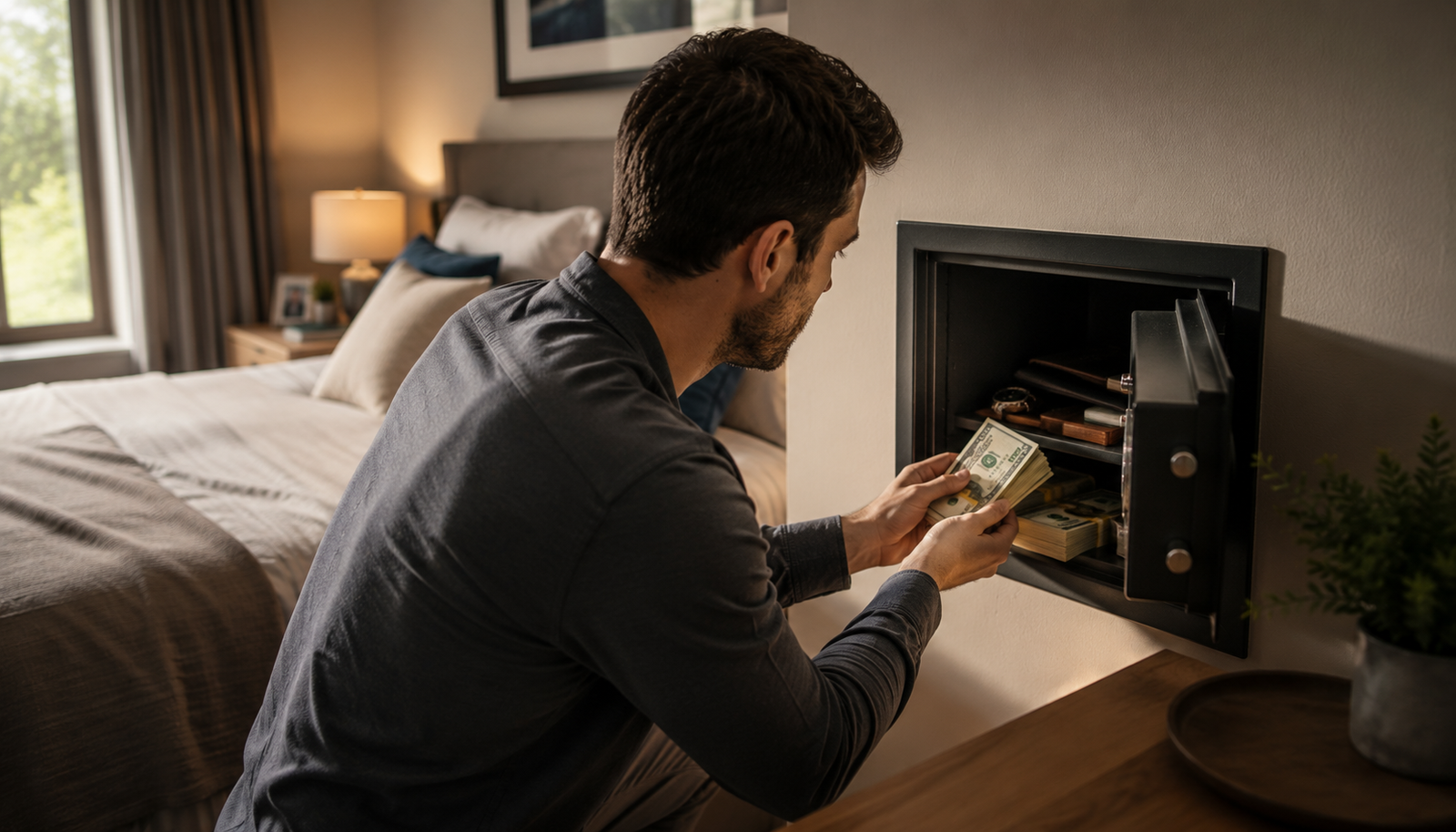
Fireproof safe
Home safe bolted down securely
Lockbox
Avoid:
Under the mattress
Freezer
Sock drawer
Obvious hiding spots
Remember, physical cash is vulnerable to theft, fire, and water damage.
Use Small Bills
Many people overlook this.
Keeping a mix of denominations makes your emergency cash more practical.
Consider including:
$5 bills
$10 bills
$20 bills
Large bills may be difficult to break during emergencies when businesses are experiencing shortages.
Mistakes People Make
Keeping Too Little
A small amount of cash may not be enough during extended outages or emergencies.
Keeping Too Much
Excess cash loses purchasing power over time due to inflation and doesn’t earn interest.
Forgetting About It
Review your cash stash periodically and replace damaged bills.
Telling Everyone About It
The fewer people who know where you keep cash, the better.
What Many Articles Miss
Cash isn’t only useful for natural disasters.
Temporary banking outages, card fraud, frozen accounts, or technical problems can make accessing your money difficult.
Even a short disruption can become stressful if you don’t have physical money available.
Having a modest amount of cash at home provides an extra layer of financial resilience.
A Simple Rule
Instead of aiming for a specific dollar amount, consider keeping enough cash to cover:
Three to seven days of necessities
Including:
Food
Gas
Medication
Basic household supplies
This approach adjusts naturally to your lifestyle and spending habits.
So, How Much Cash Should You Have at Home?
Most people don’t need thousands of dollars hidden around the house.
For many households, an emergency cash amount between $300 and $1,000 is sufficient.
The goal isn’t to prepare for the apocalypse.
It’s simply to make sure you can handle temporary disruptions without unnecessary stress.
Because when emergencies happen, convenience matters.