Saving money sounds simple until the bills arrive, the grocery budget runs over, and an unexpected expense decides to show up at exactly the wrong time.
So, how much of your paycheck should you actually save?
A common starting point is 10% to 20% of your income, but the right amount depends on your expenses, debt, emergency fund, retirement goals, and how much money you have left after paying for necessities. The important thing isn’t hitting a magical number overnight. It’s building a savings rate you can maintain and gradually increasing it as your finances improve.
How Much of Your Paycheck Should You Save?
For many people, saving 15% to 20% of their income is a reasonable long-term target. If you’re currently saving nothing, however, starting with 5% or 10% is still a meaningful step.
For retirement specifically, Fidelity currently recommends aiming to save at least 15% of pretax income annually, including employer contributions, although the appropriate amount can vary depending on when you start saving, when you plan to retire, and your retirement goals.
Here’s a simple way to think about it:
5%: A good starting point if money is extremely tight.
10%: A solid initial savings target.
15%: A strong goal, particularly for retirement savings.
20%: An ambitious savings rate that can accelerate financial goals.
25% or more: Potentially useful if you’re pursuing early retirement, paying for a major goal, or trying to catch up on savings.
These aren’t rules. Your savings rate should fit your actual financial situation.
Should You Save Based on Gross or Take-Home Pay?
This is where savings advice can become confusing.
Your gross income is what you earn before taxes and other deductions. Your take-home pay is what actually reaches your bank account.
For retirement planning, percentages are often expressed as a percentage of gross or pretax income. For everyday budgeting, however, it can be easier to look at your take-home pay because that’s the money available for your monthly expenses.
For example, suppose your take-home paycheck is $4,000 per month.
Savings Rate
Monthly Savings
5%
$200
10%
$400
15%
$600
20%
$800
25%
$1,000
If saving $800 every month would leave you struggling to pay your bills, saving $400 consistently is better than setting an unrealistic target and eventually abandoning it.
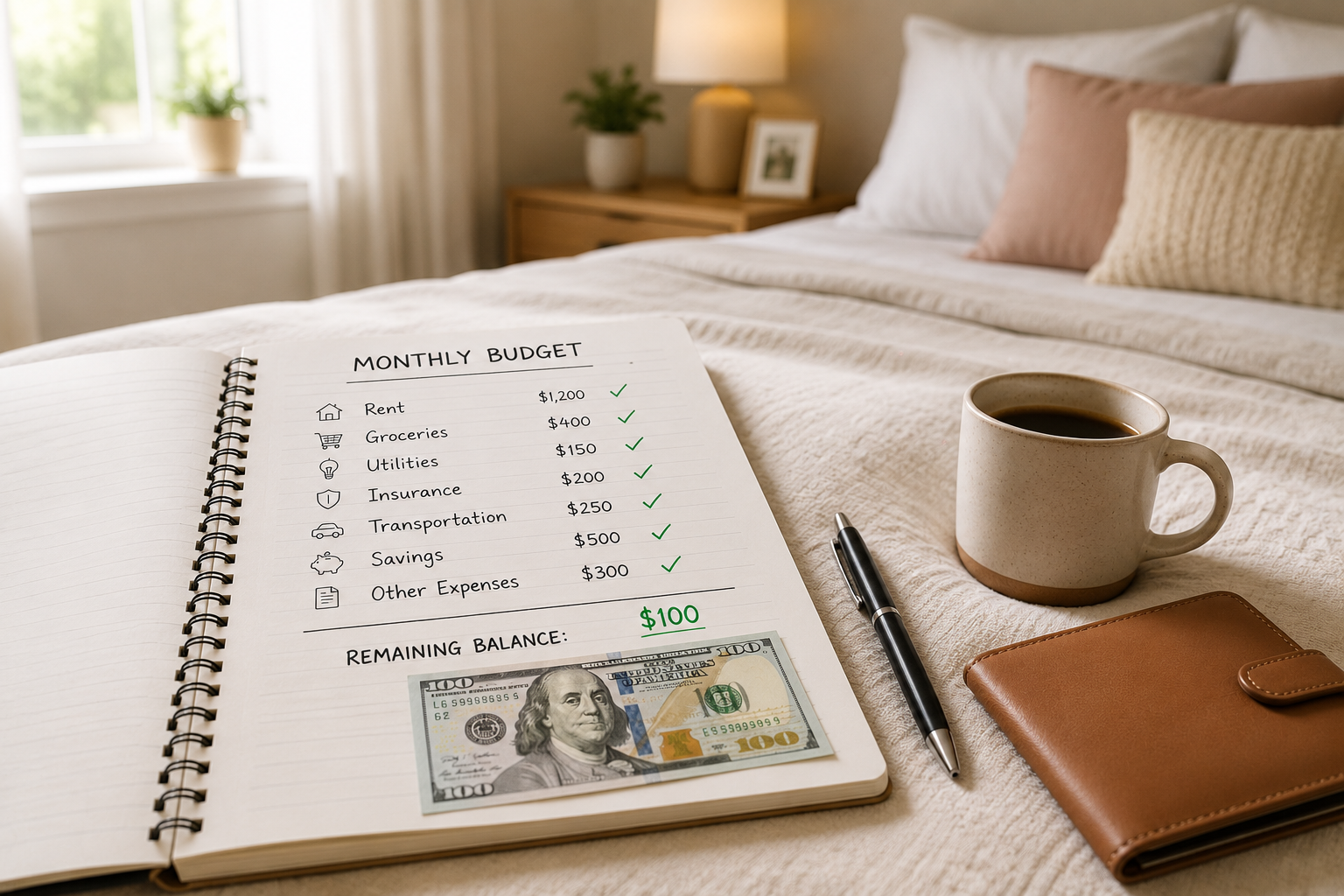
A realistic budget gives you a much clearer picture of what you can actually afford to save. If you haven’t created one yet, learning how to create a monthly budget can help you identify how much money is genuinely available after your essential expenses.
What Should Your Savings Actually Pay For?
“Savings” isn’t just one giant pile of money. Different goals may require different types of savings.
1. Emergency Fund
Your first priority may be building cash for unexpected expenses.
An emergency fund can help cover things such as an unexpected repair, medical bill, job loss, or other financial emergency without forcing you to rely on credit cards or loans. The Consumer Financial Protection Bureau recommends setting aside money specifically for unplanned expenses and emergencies.
If you don’t have an emergency fund yet, you may want to direct a larger portion of your savings toward building one before aggressively pursuing other financial goals.
For example, you might save $500 a month and divide your priorities based on your circumstances:
$300 toward your emergency fund
$100 toward a short-term goal
$100 toward retirement or long-term investing
Once your emergency savings are in better shape, you can redirect more money toward long-term goals.
Retirement is one of the biggest reasons to save consistently.
The advantage of starting early is that your money potentially has decades to grow. Fidelity’s current guideline is to aim for at least 15% of pretax income toward retirement, including employer contributions.
That doesn’t mean someone in their 20s, 40s, and 50s should automatically save the exact same percentage. Someone starting later may need to save more, while someone with substantial existing savings or other retirement income may have different requirements.
Your retirement savings should therefore be treated as a long-term target rather than a number you have to hit perfectly every month.
3. Short-Term Goals
Savings can also be used for expenses you know are coming.
Maybe you’re saving for a vacation, a new car, a home down payment, a wedding, or another large purchase. Keeping these goals separate from your emergency fund makes it easier to see whether you’re actually making progress.
Instead of thinking, “I need to save more,” give your money a job.
For example:
$4,000 take-home pay
$400 emergency/short-term savings
$400 retirement
$200 vacation or other goal
That’s $1,000 saved each month, or 25% of take-home pay.
Your numbers may look completely different, and that’s perfectly fine.
What If You Can’t Save 20%?
Don’t let a savings benchmark discourage you.
If you’re dealing with high housing costs, student loans, credit card debt, childcare expenses, or a low income, saving 20% may simply not be realistic right now.
In that situation, start smaller.
Saving $100 every month is better than saving nothing. Once that becomes comfortable, increase it to $125, then $150, and continue from there.
You can also look for opportunities to increase your savings when your income rises. Instead of immediately spending an entire raise, direct part of it toward savings.
For example, if your paycheck increases by $300 per month, you could save $150 of the increase and use the other $150 for your lifestyle.
That way, you’re improving your financial position without feeling like every raise disappears.
What If You Have Debt?
Debt can make the savings question more complicated.
You generally don’t want to completely ignore savings while aggressively paying down debt. At the same time, putting every available dollar into savings while carrying expensive credit card debt may not be the most efficient approach.
A balanced strategy could look something like this:
Build a small emergency cushion.
Contribute enough to receive any available employer retirement match.
Attack high-interest debt aggressively.
Continue building your emergency savings.
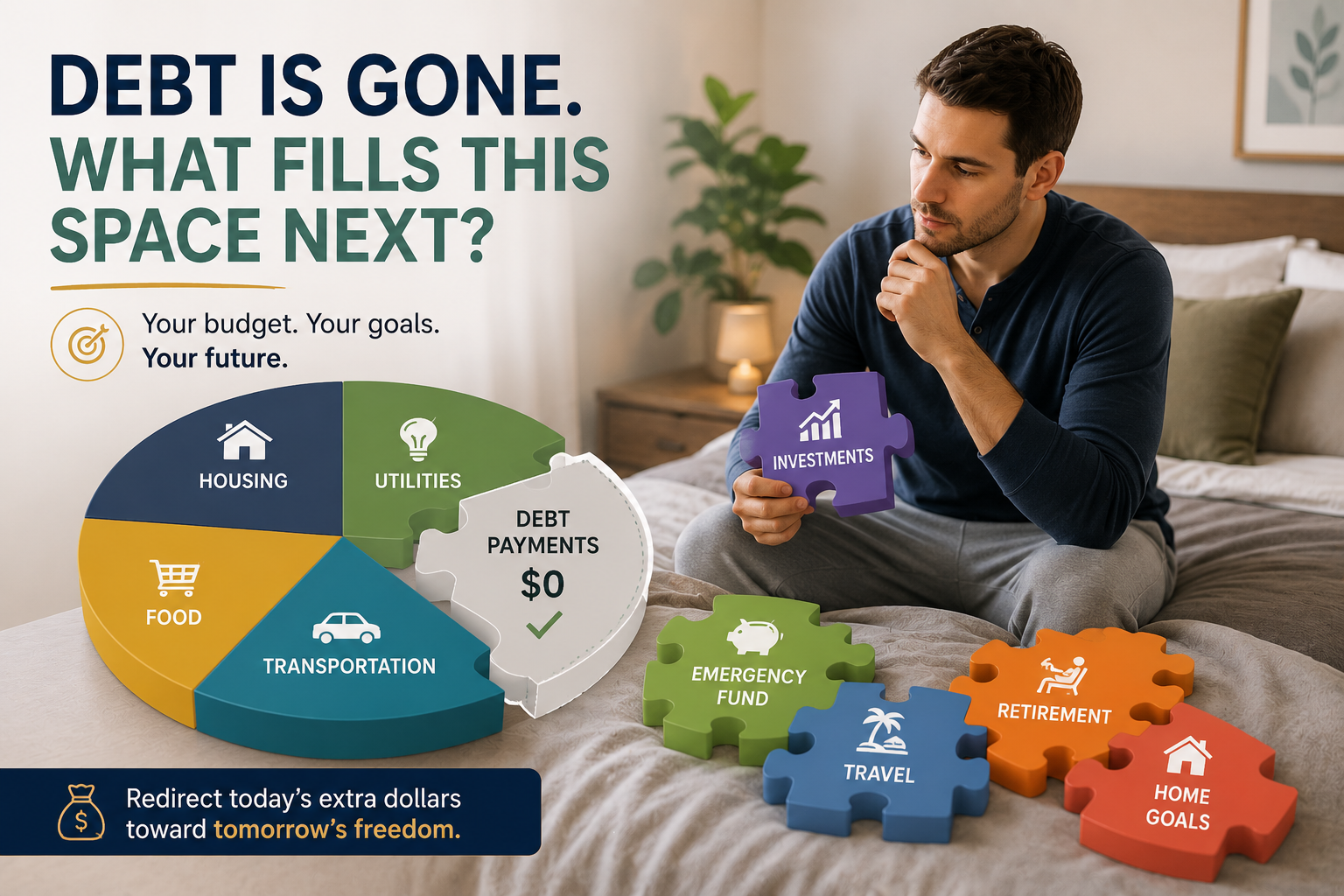
Increase retirement and long-term savings as your debt decreases.
Your priorities may change depending on the interest rates and type of debt you have.
If debt is taking up a large portion of your paycheck, your savings rate may need to be temporarily lower while you work toward becoming debt-free.
How Much Should You Save From Each Paycheck?
Instead of waiting until the end of the month to see what’s left, consider paying yourself first.
If you want to save 15% and receive two $2,000 paychecks each month, you could automatically move $300 from each paycheck into savings.
You’d save $600 before you have a chance to spend it.
Automation can make saving easier because you don’t have to rely on willpower every payday. You can also gradually increase the amount whenever your income rises.
This is particularly useful if you tend to spend whatever happens to remain in your checking account. Your savings rate becomes part of your routine instead of something you remember to do later.
A Simple Savings Target by Financial Situation
Rather than asking whether everyone should save exactly 20%, consider where you currently stand.
If you’re living paycheck to paycheck: Start with whatever is manageable, even if that’s only 1% to 5%. Your first goal may be creating breathing room in your budget.
If you have stable finances but little savings: Aim for 10% and gradually work toward 15%.
If your emergency fund is established and your finances are comfortable: 15% to 20% can be a strong savings target.
If you’re pursuing financial independence or an early retirement: You may choose to save 25% or significantly more, depending on your goals and timeline.
The best savings rate is ultimately one that you can maintain without constantly falling back into debt.
The Bottom Line
So, how much of your paycheck should you save?
Aim for 10% to 20% as a general starting range, with 15% being a useful long-term benchmark for retirement savings. But don’t treat those numbers as commandments.
If you can only save 5% today, start there. If you can comfortably save 20%, take advantage of the opportunity. And if your income increases, consider increasing your savings rate rather than allowing your entire lifestyle to inflate with it.
What matters most is consistency.
A person who saves 10% of every paycheck for years can be in a much stronger position than someone who occasionally saves 30% but never develops a sustainable habit.
Start with what your budget can handle, automate it, and increase the percentage as your financial situation improves.